There is no chapter break in the conversation. John 10 pours straight out of John 9, and once you see the seam, the whole discourse lights up. The religious leaders have just excommunicated a man for being healed. They drove one of God's sheep out into the cold to protect their own standing. And Jesus, still in earshot, begins to talk about shepherds: about hirelings who abandon the flock and thieves who only come to steal, and about a true shepherd who knows his sheep by name and would die before he would lose one. Every listener steeped in the Scriptures would have felt the ground shift, because there was a famous, furious passage about exactly this, and Jesus was standing in it.
1The door and the shepherd
Centuries earlier, God had thundered against the "shepherds of Israel" — the leaders — who fed themselves while the flock was scattered and preyed upon: "you have not strengthened the weak… the strayed you have not brought back… with force and harshness you have ruled them" (Ezekiel 34:4). And God had made a promise: "I myself will search for my sheep… I myself will be the shepherd of my sheep" (34:11, 15). When Jesus stands in front of Israel's failed shepherds and calls himself the good shepherd, he is not reaching for a sweet pastoral image. He is announcing that the promise of Ezekiel 34 has arrived in person. God himself has come to shepherd the flock the hirelings ruined.
Jesus gives us two "I am" images from a single scene at the sheepfold, and they fit together. He is the door — the only way in and out, the entrance to safety and pasture; and he is the shepherd — the one who leads and guards and provides. But he defines the good shepherd by one act above all, and it is not what we might expect. Not that he feeds them, though he does; not that he heals them, though he does. The good shepherd is the one who "lays down his life for the sheep." An ordinary shepherd might risk his life for the flock; no shepherd's plan is to die for the sheep. This one's is. The cross is not an accident that happens to Jesus; it is the shepherd's whole intention.
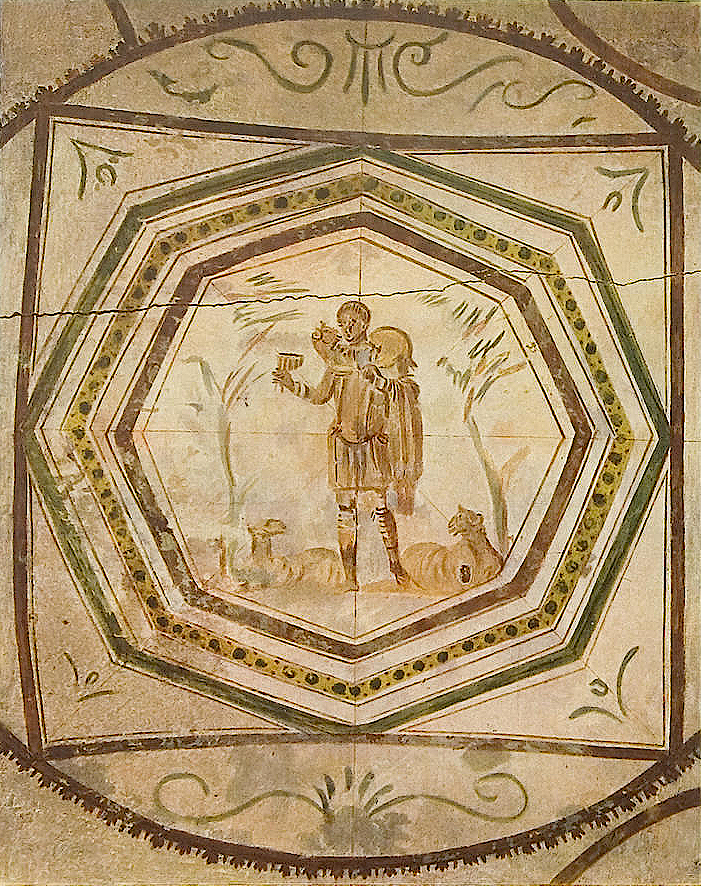
Two things to catch here. First, the depth of the knowing: the shepherd knows his sheep the way the Father and the Son know each other — not as a farmer knows his livestock but as persons who share a life. To be one of his sheep is to be known like that. Second, the "other sheep that are not of this fold." Jesus is looking past Israel to the nations — to the Samaritans who called him Savior of the world, and beyond them to us, the Gentiles who would be gathered in. One flock, one shepherd. The people of God would not stay a single nation huddled in one fold; the shepherd meant to bring home sheep from everywhere.
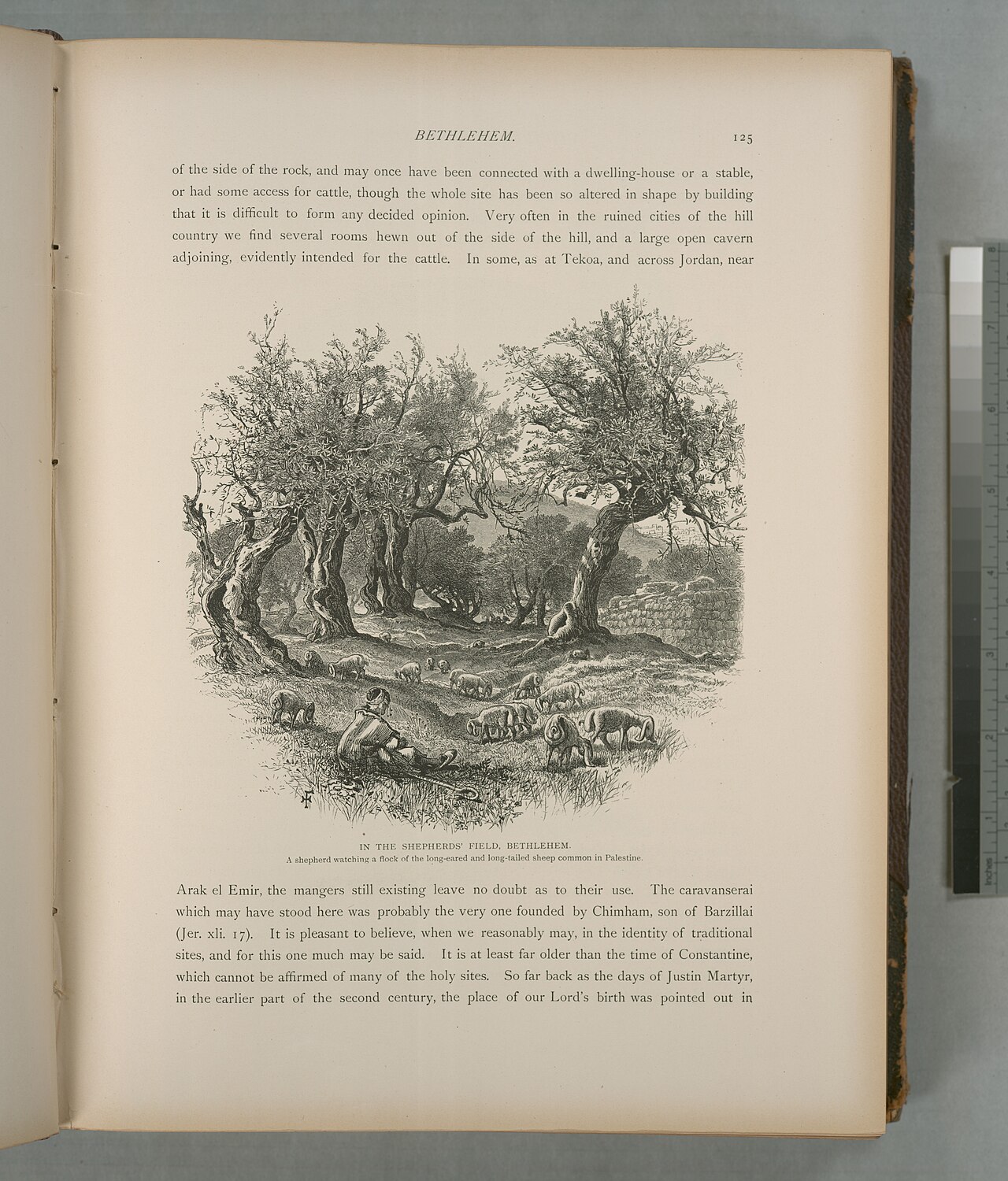
And lest anyone pity him as a victim, Jesus says the death will be entirely his own choice: "No one takes it from me, but I lay it down of my own accord. I have authority to lay it down, and I have authority to take it up again" (10:18). No one will ever take Jesus' life. He will hand it over — and then pick it up again. Even at the cross, the shepherd is in complete command.
The shepherd runs all through the Bible — God as Israel's shepherd, the promised shepherd-king, and the great shepherd who rose from the dead. Follow the flock:
2“No one will snatch them out of my hand”
The scene shifts to winter, to the Feast of Dedication — Hanukkah — and the authorities corner him in the temple: "If you are the Christ, tell us plainly." Jesus answers that the problem is not a lack of plain speaking but that "you do not believe because you are not among my sheep." And then he says something that has steadied frightened believers for two thousand years.
Look at how the security is stacked. The sheep are in the Son's hand. The Son's hand is in the Father's hand. And the Father is greater than all. For anything to pluck a single sheep away, it would have to pry open two hands, one of them Almighty God's. The safety of the sheep does not rest on the strength of their grip on the shepherd — a comfort, since our grip is weak — but on the strength of his grip on them. "They will never perish" is not a reward for sheep who hold on well enough. It is a promise about the hands they are held in. And the sentence lands on the same claim that has been building all Gospel long: "I and the Father are one." One in power, one in purpose, one hand inside the other.
3Stones again
For the second time in three chapters, his hearers reach for stones, and once again their reason tells us they understood him perfectly. They do not stone him for claiming to be a good teacher or a moral example; they stone him for the one thing modern readers are often told he never claimed — that "you, being a man, make yourself God." The charge is exactly right about what Jesus was saying and exactly wrong about whether it was blasphemy. It would be blasphemy, if it were not true. Jesus slips through their hands and withdraws across the Jordan, to the very place where John had first baptized (10:40) — back where it all began, where a voice had once pointed and said, "Behold, the Lamb of God." Many there believed. The shepherd is quietly gathering his flock even as the wolves close in.
Where this leaves us
Held
Set against the hirelings of chapter 9 — the shepherds who cast a healed man out to guard their own position — Jesus stands as their opposite in every line. They fed themselves; he lays down his life. They scattered the flock; he gathers sheep from every fold into one. They drove out the one who could not defend himself; he goes after the outcast and carries him home on his shoulders. And to everyone who hears his voice and follows, he makes a promise that no chapter of loss or fear can undo: you are in his hand, and his hand is in the Father's, and no power in heaven or earth can pry you loose. The Christian's security was never the firmness of our hold on Christ. It is the firmness of his hold on us — a good shepherd who would sooner die than lose a single one, and who did.
Questions
- Jesus defines the good shepherd not by what he provides but by his willingness to die for the sheep. How does it change your view of the cross to see it as the shepherd's plan, not his defeat? Discuss
- "My sheep hear my voice." Amid all the competing voices in your life, how have you learned to recognize his? Reflect
- The sheep's security rests on the shepherd's grip, not theirs. Where do you tend to trust the strength of your own hold on God rather than his hold on you? Reflect
- "Other sheep that are not of this fold… one flock." How should the shepherd's intention to gather people from everywhere shape the way we see those still outside? Discuss
- They tried to stone him precisely because he claimed to be God. Why does it matter that the earliest opposition understood his claim so clearly? Discuss