This is the seventh sign, the climax of the whole first half of the Gospel, and John has been building toward it since Cana. Water became wine; a boy's lunch fed thousands; a man born blind was given sight. Now the signs reach as far as they can go: a man four days in the tomb, his body already decaying, is called back to life. It is the sign that proves beyond argument who Jesus is — and it is precisely because it is so undeniable that it forces the authorities' hand. From this miracle forward, they stop debating him and start plotting to kill him. John wants us to feel the terrible irony with full weight: the act that most clearly shows Jesus to be the Lord of life is the very act that sends him to his death.
1“I am the resurrection and the life”
Word comes that Lazarus, whom Jesus loved, is gravely ill. And Jesus does the one thing no one expects: he stays put two more days, on purpose, until Lazarus is dead. It looks like negligence and is in fact love with a longer view — "It is for the glory of God, so that the Son of God may be glorified through it" (11:4). By the time he reaches Bethany, Lazarus has been in the tomb four days, past any hope. Martha comes out to meet him with a sentence that is half faith, half reproach, and wholly honest: "Lord, if you had been here, my brother would not have died."
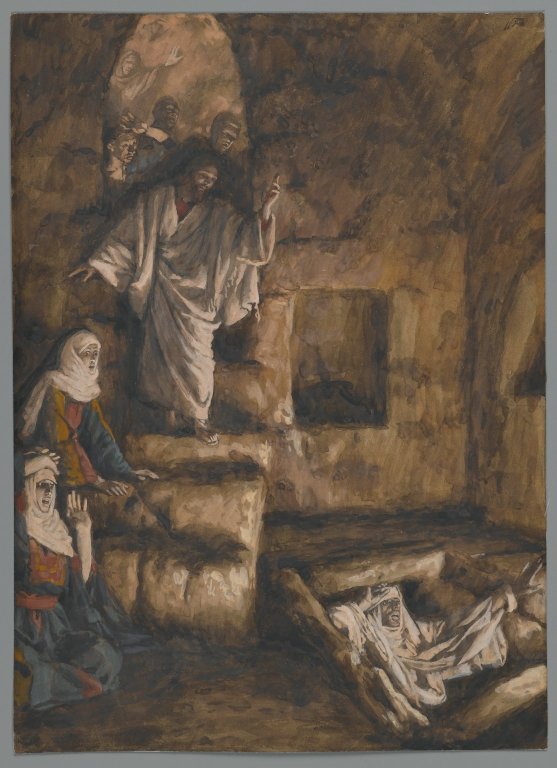
Jesus tells her that her brother will rise, and Martha — a good, orthodox believer — assumes he means the general resurrection at the last day. Yes, she says, I know, someday. And then Jesus lifts the whole hope out of the distant future and plants it in himself.
I am the resurrection and the life. Whoever believes in me, though he die, yet shall he live.
John 11:25It is the boldest of all the "I am" sayings so far. Resurrection is not merely something Jesus will do at the end of time; it is something he is. Eternal life is not first a place or a future event but a Person, and to be joined to him is already to possess it, death or no death. "Do you believe this?" he asks Martha — and it is one of those questions in John that reaches straight off the page. Martha's answer is a model confession: "Yes, Lord; I believe that you are the Christ, the Son of God, who is coming into the world" (11:27). She cannot yet see the empty tomb. She believes the Person in front of her, and that is enough.
The hope of resurrection was a long time growing in Scripture before it stood up and spoke at Bethany. Trace it from the prophets to the last enemy destroyed:
2Jesus wept
Then comes one of the most human moments in all of Scripture. Mary falls at his feet with the same broken sentence her sister used, and the whole company is weeping, and something breaks open in Jesus.
"Jesus wept" is the shortest verse in the English Bible, and one of the deepest. Look at how strange it is. He knows that in a few minutes he is going to raise Lazarus. He knows the tears in this crowd will turn to astonished joy before the hour is out. And he weeps anyway. The Lord of life is not above grief; he enters it. The word behind "deeply moved" carries a note of anger, a snort of indignation. Jesus is not only sad at a graveside. He is furious at death itself, at the wreckage sin has made of a good world. This is the God who does not stand at a clinical distance from our losses. The One who will call Lazarus out first stands at his tomb and cries. Whatever else this chapter teaches about resurrection, it teaches that our tears are not beneath him. He shed them too.
3“Lazarus, come out”
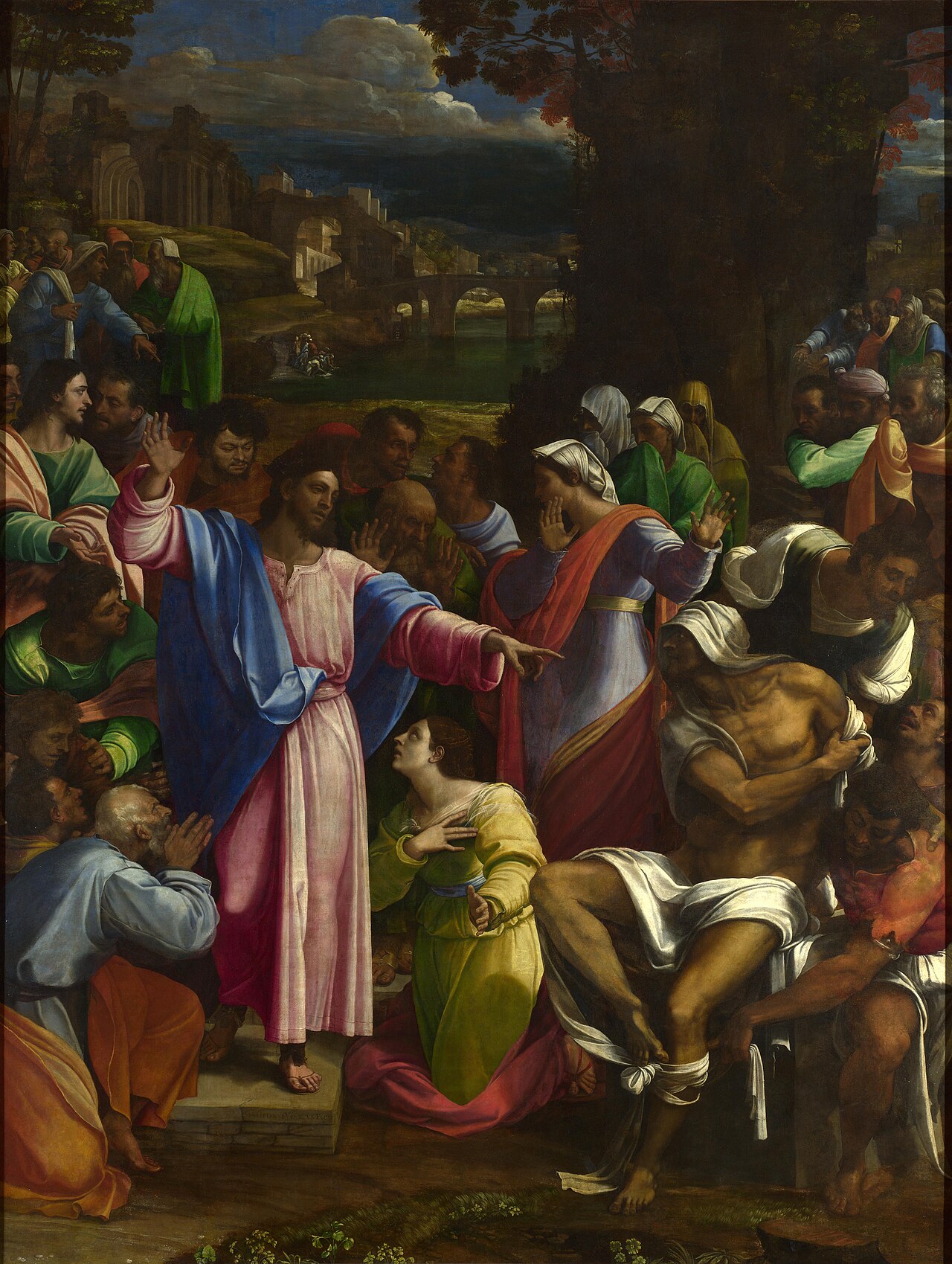
They roll away the stone, and Jesus, after a prayer offered aloud for the crowd's sake, simply speaks. It has been well said that he had to call Lazarus by name, or the whole cemetery would have emptied. That may be more than the text says, but it is not more than the text means: this is the voice he described back in chapter 5, the voice that "the dead will hear… and… will come out" (5:28–29), rehearsed now on one man ahead of the day it will be spoken over all. And out he comes, still trussed in his graveclothes, and Jesus gives the order that is almost tender after so much grandeur: "Unbind him, and let him go." Set the man free from the trappings of death; they have no more claim on him.
It is worth being clear about what did and did not happen here. Lazarus was resuscitated — brought back to the same mortal life, in the same body, with the same graveclothes, and he would one day die again. That is different from what would happen to Jesus on Easter morning: resurrection to a new and deathless life, the graveclothes left behind folded and empty, death conquered rather than merely postponed. Lazarus is a sign pointing to the reality — a preview of a coming attraction, not the feature itself. Which is exactly why it belongs at the end of the Book of Signs. The signs have taken us as far as signs can go: to a dead man walking out of a tomb. For the real thing, we will have to follow Jesus to a tomb of his own.
4The sign that sealed his death
The response to the greatest sign is the darkest turn yet. Many believe. But the authorities convene an emergency council, worried that the whole nation will follow him and bring Rome down on their heads. And the high priest cuts through the panic with a line dripping in an irony he cannot see.
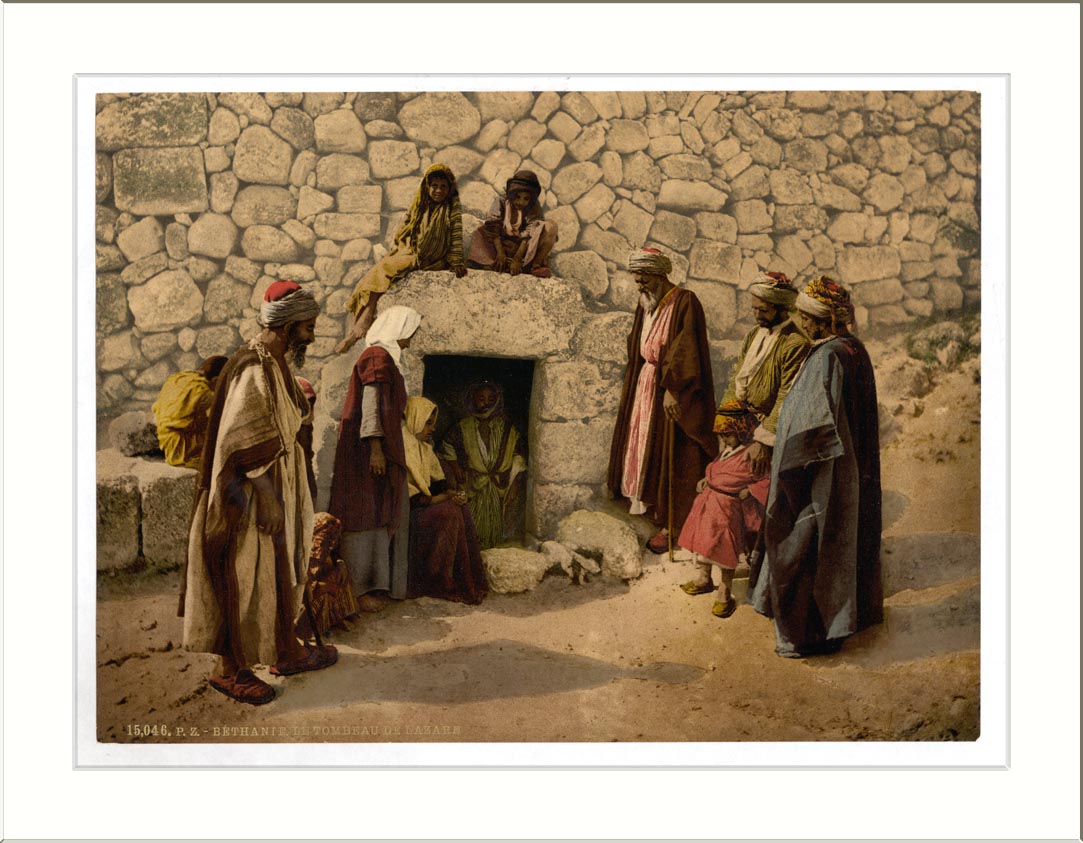
Caiaphas means it as cold political math: sacrifice one troublemaker to save the nation's skin. John catches him saying vastly more than he knows. "One man should die for the people" is, without Caiaphas realizing it, the gospel in a sentence — the substitution at the heart of the cross, that Jesus would die in the place of many so they need not perish. The high priest, whose office was to offer the sacrifice, unwittingly prophesies the sacrifice God is about to offer. And so it is settled: "from that day on they made plans to put him to death" (11:53). The Lord of life had raised a dead man, and it cost him his life. He knew it would. He did it anyway.
Where this leaves us
“Do you believe this?”
The Book of Signs ends where it always had to: at a grave, with a question. Everything from the wine at Cana has been building the evidence, and here it reaches its verdict — a corpse walks. But John does not leave us to admire the miracle from a distance. He leaves us with the question Jesus put to a grieving woman before there was any empty tomb to point to: "I am the resurrection and the life… do you believe this?" That is the question the whole first half of the Gospel has been asking, and it will not be answered by watching Lazarus stumble into the daylight. It is answered the way Martha answered it — by looking at the Person making the claim and saying yes, before the proof, on the strength of who he is. Lazarus would die again. The One standing at his tomb, weeping and then commanding, would not. And that is the difference on which everything hangs.
Questions
- Jesus delayed on purpose, and it looked like neglect. When has a delay you resented later turned out to be love with a longer view? Reflect
- "I am the resurrection and the life" — resurrection as a Person, not just a future event. How does it change facing death to know eternal life is something you already have in Christ? Discuss
- Jesus wept at a grave he was about to empty. What does it mean to you that he enters our grief rather than rising above it? Reflect
- Lazarus was raised only to die again; Jesus would rise to die no more. Why does that distinction matter for where we put our hope? Discuss
- Caiaphas spoke the gospel without believing it: "one man should die for the people." Where do you see God bringing truth even out of those who oppose him? Discuss