John 12 is a doorway. Behind it lies the Book of Signs, seven great miracles that have argued, one after another, that Jesus is the Son of God. Ahead of it lies the Book of Glory, the long last night and the cross toward which everything has been leaning. This chapter stands in the frame between them, and it gives us three final scenes from the public ministry: a woman pouring out perfume, a king riding a donkey, and a handful of foreigners asking to see Jesus. Then the doors of that ministry close for good on a sober note of unbelief. Running through all of it is a single word that has been waiting since Cana to be spoken in the present tense: the hour.
1The extravagance of love
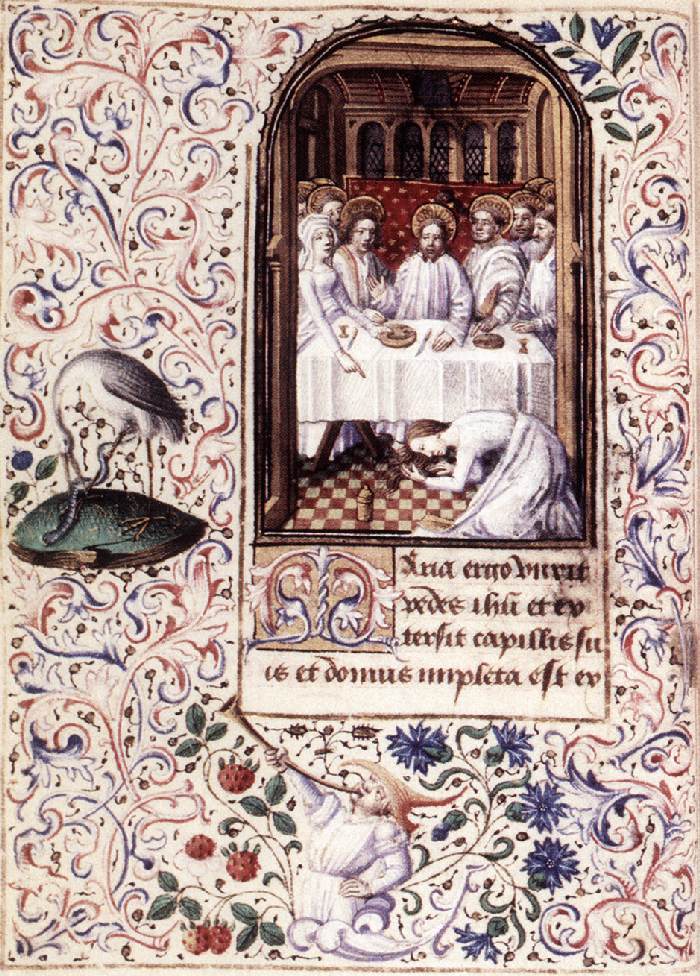
Six days before Passover, at a dinner in Bethany, Mary does something reckless. A pound of pure nard was worth a year's wages, a fortune poured out in a single gesture, and she uses her own hair, a woman's glory, as a towel for his feet. It is love with the brakes off, the kind that does not do arithmetic. Judas does the arithmetic for her: "why was this ointment not sold… and given to the poor?" It is a pious-sounding objection that John quietly exposes as theft (12:6). The scene draws a hard line between two ways of relating to Jesus. One counts the cost and calls devotion waste. The other counts him worth everything and cannot give enough. Jesus defends her without hesitation: "Leave her alone… she has kept it for the day of my burial." Mary, perhaps alone among them, has sensed where this is heading, and she has loved him for it in advance.
2The King on a donkey
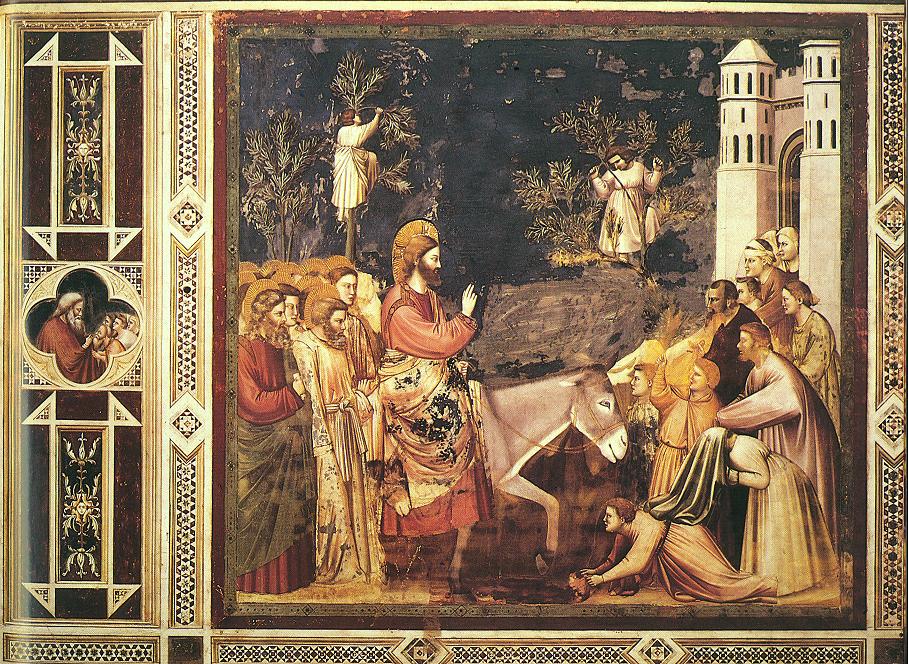
The next day the city erupts. Word of Lazarus has spread, and the Passover crowds pour out with palm branches — a nationalist symbol, the flag of a people longing for a liberator — hailing Jesus as the King of Israel. And he is a king; but he stages his entry to correct their idea of what kind. He does not ride a warhorse. He finds a young donkey and sits on it, deliberately acting out an old prophecy: "Behold, your king is coming, sitting on a donkey's colt" (Zechariah 9:9), the sign of a king who comes in peace, not conquest. The crowd wants a general to drive out Rome. Jesus offers a king who will drive out the ruler of this world by dying. John notes that even the disciples did not understand it at the time (12:16); they only saw the meaning later, from the far side of the resurrection. The parade was real, but it was celebrating the wrong victory.
3Unless a grain of wheat dies
Then a small, world-shifting request. Some Greeks — Gentiles, outsiders — come to Philip: "Sir, we wish to see Jesus." It seems minor, but for Jesus it is the trigger. The nations are beginning to seek him; the "other sheep" of chapter 10 are at the door. And that means the moment has finally arrived.
The hour, at last, is now. And Jesus explains its logic with an image from any farmer's field. A seed kept safe in a jar stays exactly one seed forever. The only way it multiplies is to be buried, to stop being a seed, to break open in the dark ground and, in dying, become a harvest. That, he says, is the law of the cross. His death is not a tragic waste of a good life. It is the single seed going into the earth so that a whole harvest of new life can come up: Greeks and Jews, "much fruit," a family gathered from every nation. And then he presses the same law onto us: "whoever loves his life loses it, and whoever hates his life in this world will keep it for eternal life" (12:25). The way up is down; the way to fruit is through the ground. It is true of him, and it is meant to be true of everyone who follows him.

For a moment we are given a glimpse into what the hour costs him. John has no Gethsemane scene, but he has this: "Now is my soul troubled. And what shall I say? 'Father, save me from this hour'? But for this purpose I have come to this hour" (12:27). There is the whole struggle in one verse — the recoil from the cross, and the settled resolve to go to it anyway. And then he names what the cross will accomplish.
"Lifted up" is the same double-edged word from Nicodemus's night (3:14), meaning both crucified and exalted. From that raised cross, Jesus says, he will "draw all people." He does not mean every individual without exception, but all kinds, the Greeks at the door included, a worldwide harvest pulled toward a lifted-up Savior. The cross looks like the world's judgment falling on Jesus. It is in fact the judgment of the world and the defeat of its dark ruler, disguised as a defeat.
4The doors close
And then the public ministry ends, not with a triumph but with a sad, honest verdict.
Seven signs, and the nation as a whole turned away. John reaches for Isaiah to explain it — a hardening long foretold — and then adds a detail that stings more than outright rejection: "many even of the authorities believed in him, but for fear of the Pharisees they did not confess it… for they loved the glory that comes from man more than the glory that comes from God" (12:42–43). Some were convinced and stayed silent, because a good reputation was worth more to them than Christ. With that, Jesus withdraws from public view, and the Book of Signs shuts its doors. His very last public words are one more offer of light to anyone still willing: "I have come into the world as light, so that whoever believes in me may not remain in darkness" (12:46). Then he turns from the crowds to the twelve, and the long last night begins.
Where this leaves us
The hour, and the seed
This chapter asks us to make peace with a strange arithmetic. The world says save yourself, hold on to your life, count the cost before you pour anything out. Jesus, walking into his hour, says the opposite: the seed that clings to being a seed stays alone, and the life clutched too tightly is the one you lose. He is about to prove it with his own body, going down into the ground so that a harvest none of us deserved could come up. And he asks those who follow to live by the same law — to love like Mary rather than calculate like Judas, to seek the glory that comes from God rather than the glory that comes from men, to let our lives be spent rather than hoarded. The hour has come. The seed is about to fall. Everything green that has ever grown in the Christian faith grew up out of that buried grain.
Questions
- Mary "wasted" a fortune on Jesus; Judas called it waste. Where do you find yourself calculating the cost of devotion rather than pouring it out? Reflect
- The crowd wanted a warhorse king; Jesus came on a donkey. How do our expectations of what Christ should do for us still need correcting? Discuss
- "Unless a grain of wheat falls and dies…" Where is Jesus asking you to let something be buried so that something greater can grow? Reflect
- Some authorities believed but stayed silent, loving human approval more than God's. Where does the fear of what people think keep you from confessing Christ openly? Discuss
- "Now is my soul troubled… but for this purpose I have come." How does it help to see Jesus both recoil from the cross and resolve to go? Discuss