We cross a threshold here. Everything up to chapter 12 was the Book of Signs, Jesus' public ministry to the world. From chapter 13 to chapter 17 the doors are shut and the world is left outside; it is just Jesus and his own, in an upper room, on the last night of his life. John gives these hours enormous space, five chapters for a single evening, because this is where Jesus, knowing exactly what tomorrow holds, tells the people he loves what he most wants them to carry. And he opens not with a speech but with an action so shocking that Peter tries to stop it. He washes their feet.
1The towel and the basin
Read that verse slowly, because it is the doorway to everything that follows. The hour has come. Jesus knows it. And knowing it, "having loved his own… he loved them to the end" — a phrase that means both to the very last and to the uttermost, all the way, holding nothing back. Everything in the next five chapters, and everything at the cross, is the outworking of that sentence. Then John frames the foot washing with a staggering pair of clauses: Jesus, "knowing that the Father had given all things into his hands, and that he had come from God and was going back to God" — rose, and took a towel (13:3–4). It is precisely because he knew who he was, with all authority in his hands, that he could kneel. Only someone utterly secure in his identity can stoop that low.
Washing feet was the job of the lowest slave in the house, grimy work done on the filthiest part of a person after a day on dusty roads in sandals. No free Jew would do it, and even Jewish slaves were often spared it. And here is the One John has called God, on his knees with a towel and a basin, doing it for twelve men. That includes the one who has already agreed to betray him and the one who will deny him before dawn. He washes Judas's feet. The love that goes "to the end" reaches even the feet of the man selling him.
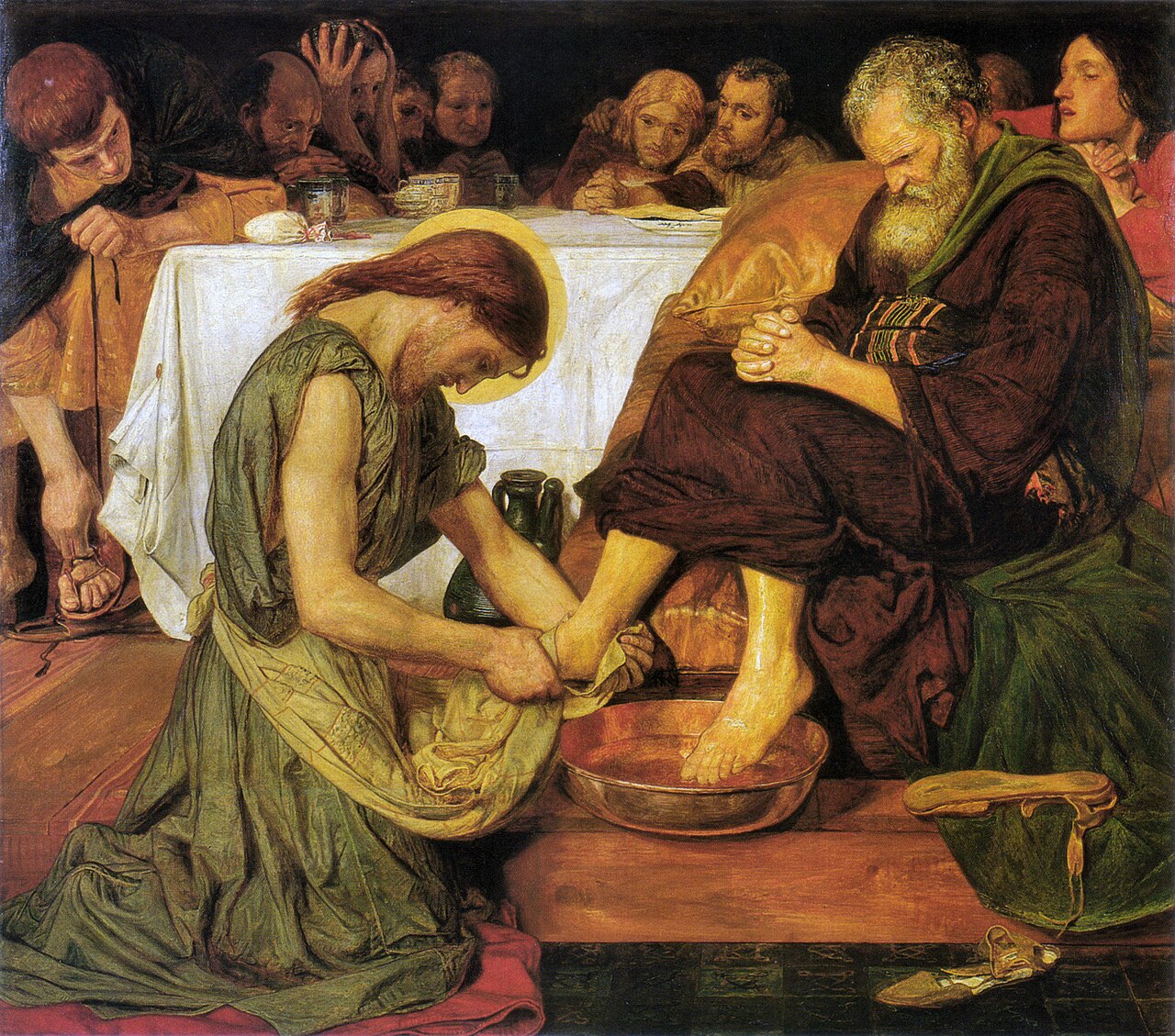
Peter's refusal is not humility; it is pride dressed as humility. He cannot bear to receive something so undignified from his Master — and Jesus tells him plainly that this is the one thing he cannot refuse. "If I do not wash you, you have no share with me." Here is the offense at the heart of grace: before we can do a single thing for Jesus, we have to let him do the demeaning, cleansing work for us. Many of us are far more comfortable serving than being served, giving than receiving — and Jesus says the door into fellowship with him is to stop protesting and let him wash you. Peter, overcorrecting as always, then wants a full bath; Jesus explains that the once-for-all cleansing is settled, and only the daily grime of the journey needs washing (13:10). Cleansed once, we still need his ongoing washing for the dust we pick up along the way.
2“I have given you an example”
Having received it, they are to give it. The logic is unanswerable: if the Lord and Teacher stoops to serve, no follower is too important to do the same. Jesus is not instituting a foot-washing ceremony so much as setting the pattern for a whole way of life. Greatness in his kingdom runs exactly opposite to greatness everywhere else. The world climbs; his people kneel. And the thing about a towel and a basin is that they are always available — there is always some humble, unglamorous service to be done for the person next to you. The question the scene leaves is not whether we admire his humility but whether we will copy it, on our knees, for people who may never thank us.
3“And it was night”
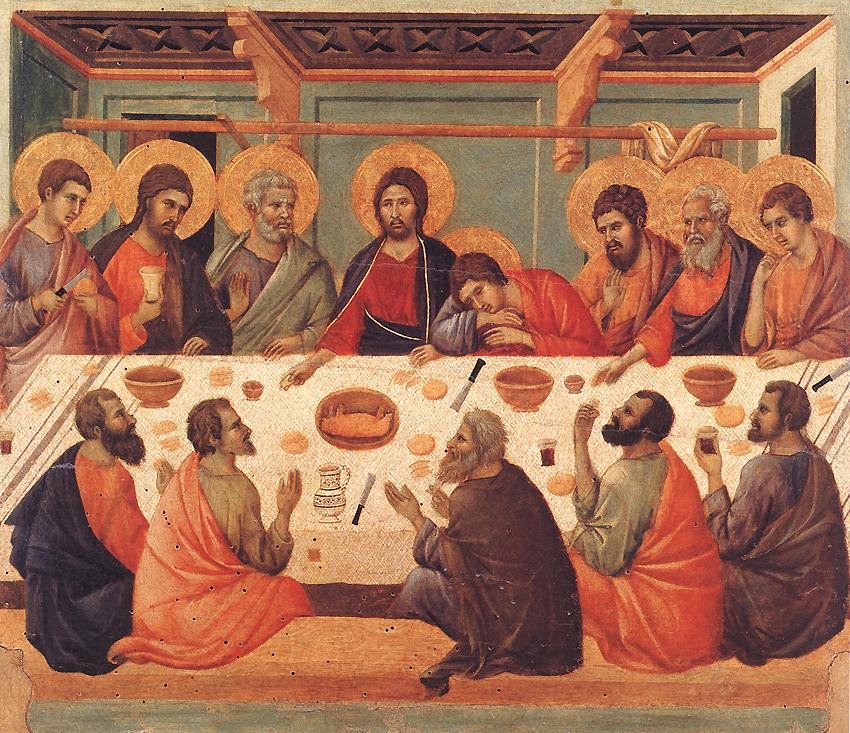
Into this scene of love, John lets the shadow fall. Jesus is "troubled in his spirit" and says outright that one of them will betray him. He identifies the traitor by handing him a piece of bread — a gesture of honored friendship, offered even now to Judas. And then the saddest exit in Scripture:
"And it was night." John, who has traded in light and darkness since verse 1, does not add those three words for the weather. Judas steps out of the lamplit room where the Light of the world is washing feet, and into the dark he has chosen. It is the most literal darkness in the Gospel and the most symbolic. A man can sit at the very table of Jesus, have his feet washed by the Lord's own hands, receive bread from his fingers — and still walk out into the night. Nearness is not the same as belonging.
4The new commandment
With the betrayer gone, Jesus turns to the eleven and gives them the one command he most wants to leave behind — a "new" commandment, not because love was never commanded before, but because the measure of it is now unprecedented.
A new commandment I give to you, that you love one another: just as I have loved you, you also are to love one another.
John 13:34The old command was "love your neighbor as yourself," with the self as the standard. The new one raises the bar impossibly high: "as I have loved you." And they have just watched what that love looks like: a Lord on his knees with a towel, hours from a cross, loving even his betrayer to the end. That is now the measure. And Jesus attaches to it the great identifying mark of his people: "By this all people will know that you are my disciples, if you have love for one another" (13:35). Not by our arguments or our buildings or our correctness, but by our love. The world was given permission, in a sense, to judge the reality of our faith by how we treat one another. It is a sobering badge to wear. The chapter ends with Jesus gently foretelling that even bold Peter, who swears he will die for him, will deny him three times before the rooster crows. It is a reminder that the love being commanded here is beyond our own strength, and that the One commanding it already knows our weakness and loves us anyway.
Where this leaves us
Loved to the end
Everything about this night is gathered up in the towel. The One with all things in his hands used them to wash feet. The One about to be betrayed washed the betrayer's feet. The One who is Lord and Teacher knelt, so that no follower of his could ever again think any act of love beneath them. And underneath all of it is that verse at the top: "having loved his own… he loved them to the end." He knew what Peter would do that very night, and washed his feet. He knows what we will do tomorrow, and washes ours. The call that comes out of this room — to receive his cleansing before we protest, and then to love one another the way we have been loved — is not a burden laid on the strong. It is the natural overflow of people who have knelt at the same basin and felt the water on their own feet.
Questions
- Jesus could stoop so low precisely because he was so secure in who he was. How might insecurity about your own worth be keeping you from humble service? Reflect
- Peter found it harder to be served than to serve. Are you more comfortable washing others' feet than letting Jesus wash yours? Why? Reflect
- He washed Judas's feet too. What does it mean to love "to the end" someone you know will wound you? Discuss
- "By this all people will know… if you have love for one another." If the world judged your faith by how you treat other believers, what would the verdict be? Discuss
- Judas sat at the table, had his feet washed, and still went out into the night. What is the difference between being near Jesus and belonging to him? Discuss