John 9 is the most tightly built chapter in the Gospel, a little play in seven scenes, with a cast that shifts around one silent center. Jesus appears only at the beginning and the end; in between, a healed beggar has to defend a miracle he barely understands to neighbors, then Pharisees, then his own frightened parents, then the Pharisees again. And as the questioning grinds on, something quietly astonishing happens. The man who started the day physically blind sees more and more clearly who Jesus is, while the religious authorities, staring at the same evidence, go blinder by the minute. The chapter is a working diagram of the line Jesus drew back at the feast: "I am the light of the world." Light does two things. It lets some people see. And it shows up, mercilessly, those who have chosen the dark.
1“Who sinned?”
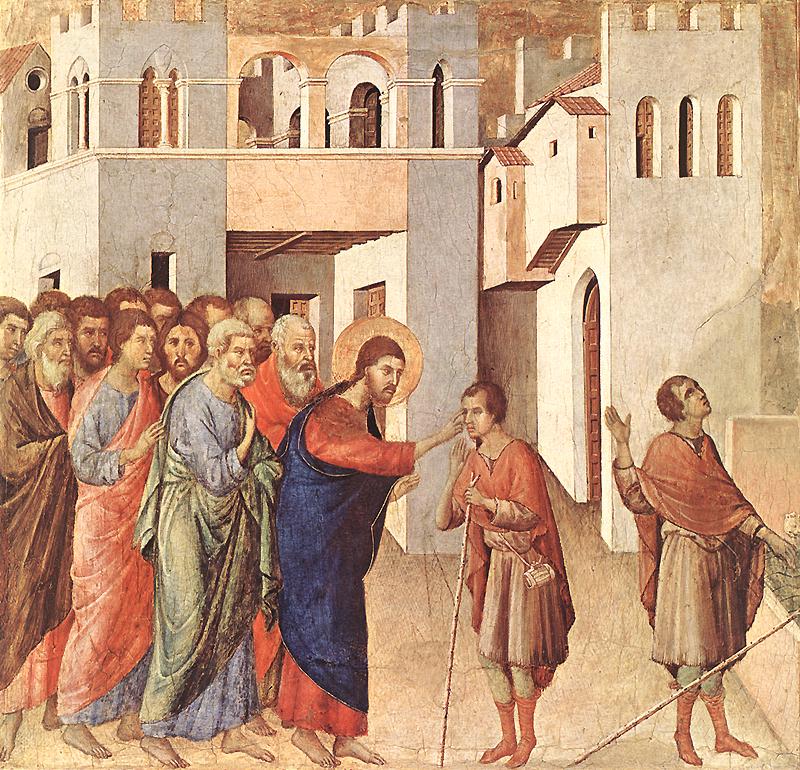
The disciples look at a blind man and see a theology puzzle: whose fault is this? It was the reflexive assumption of the age — suffering is punishment, so trace it back to the sin that caused it. Jesus refuses the whole premise. He does not say the man is sinless, only that his blindness is not a verdict for some specific offense. Instead he turns their eyes from the past to the future, from cause to purpose: this happened "that the works of God might be displayed in him." That is not a cold answer that treats a man as a stage prop. It is a merciful reframing. The question is not always "what did someone do to deserve this?" but "what will God do with it?"
Jesus here quietly dismantles a piece of bad theology that never quite dies — the assumption that hardship is always a direct payback for wrongdoing. The book of Job spends forty chapters demolishing it; Jesus elsewhere flatly denies that the people crushed by a falling tower were worse sinners than anyone else (Luke 13:1–5). This does not mean sin never has consequences, or that the world is not fallen. It means you cannot read a person's suffering as a scoreboard of their guilt. When you meet someone in pain, the useful question is rarely "what did they do?" It is "how might God be at work here, and how can I be part of it?"
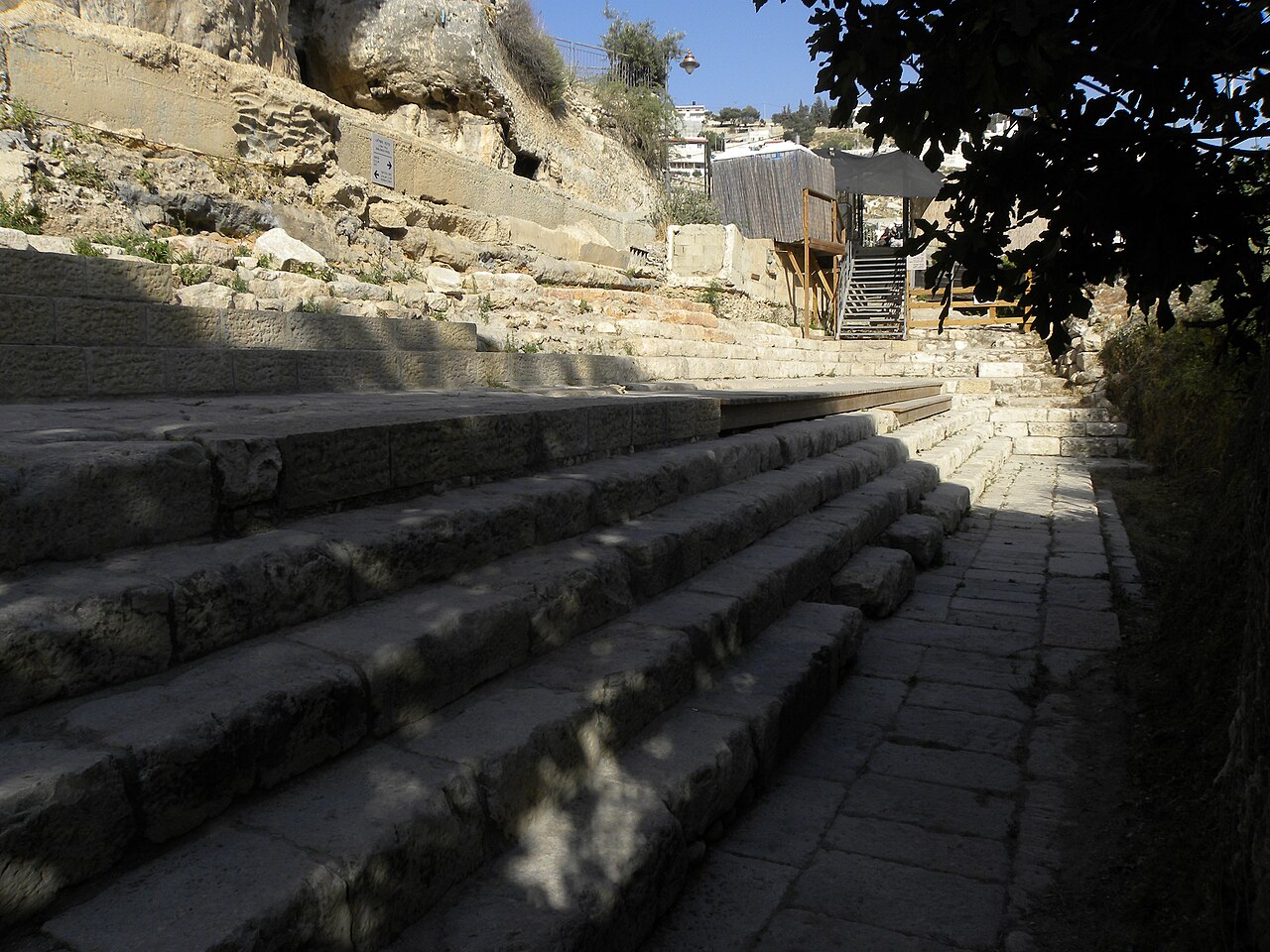
John pauses to translate a place name for us, which is his way of nudging our elbow: Siloam "means Sent." The blind man is healed at the pool of the Sent One — and Jesus is, in this Gospel above all, the one the Father sent. The detail is a wink. The water did not heal him; the Sent One did, and the pool just happens to spell it out.
2“One thing I know”
What follows is almost comic if it were not so grim. Instead of rejoicing that a lifelong blind man can see, the authorities open an investigation, because it happened on a Sabbath. They question the man. They question his parents, who are so afraid of being "put out of the synagogue" that they duck: "he is of age; ask him." They haul the man back for a second round and coach him to denounce his healer. And with each round of pressure, the beggar gets bolder and their case gets thinner, until he says the thing that cuts through all of it.
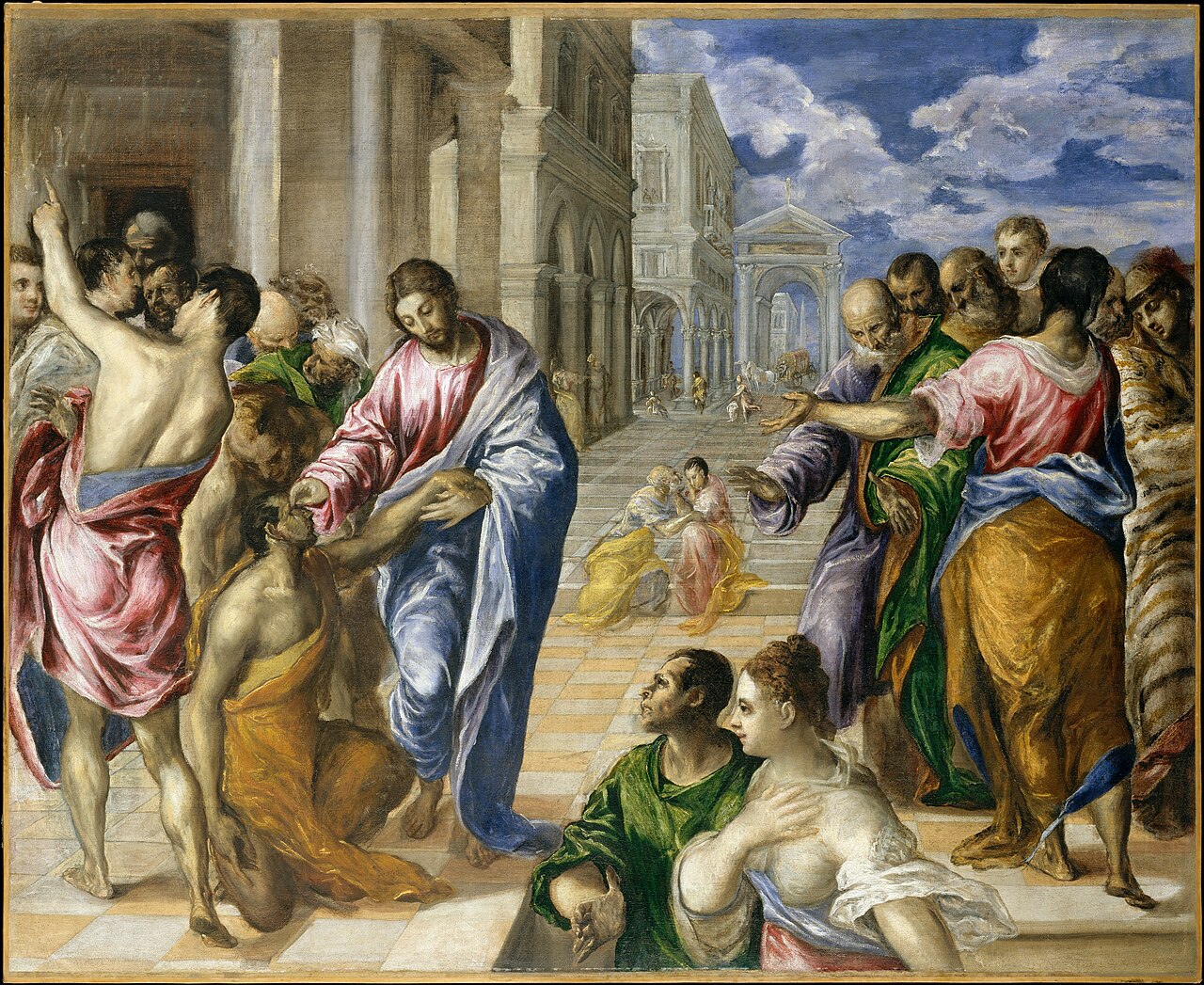
There is a whole theology of witness in that sentence. The man is no scholar; he cannot win the debate on their terms, and he does not try. He simply refuses to deny what has happened to him. "I was blind, now I see" — you cannot argue a person out of that. And notice how his understanding of Jesus climbs even as the pressure rises. At first Jesus is just "the man called Jesus" (9:11). Under questioning he becomes "a prophet" (9:17). By the second interrogation the beggar is lecturing the theologians: "if this man were not from God, he could do nothing" (9:33). The more it costs him to confess Christ, the more clearly he sees him. Faith often grows fastest under fire.
It costs him everything a first-century Jew had. "And they cast him out" (9:34) — excommunicated, cut off from synagogue and community for the crime of telling the truth about Jesus. He gains his sight and loses his world on the same day.
3“Lord, I believe”
This is the quiet heart of the chapter. The moment the man is thrown out, Jesus comes looking for him — the Good Shepherd going after the sheep the false shepherds have driven off, which is exactly the point Jesus will make in the very next chapter. The man who was cast out of the synagogue is found by the Son of God, and he ends the day not just seeing but worshiping. He lost a community and gained a Savior. And there is one last beautiful touch: "you have seen him." The first face this man born blind ever truly saw was the face of Christ.
4Who is really blind
Here the whole drama snaps into focus. The light that opened a blind man's eyes also, by the same shining, exposed people who could not see and would not admit it. That is the "judgment" Jesus means — not a sentence he hands down but the sorting the light performs simply by being present. The tragedy of the Pharisees is not that they were blind; it is that they were blind and certain they could see. That certainty is what locks the door. A blind man who knows he is blind will reach for help; a blind man who insists he sees perfectly will refuse the very thing he needs. "Now that you say, 'We see,' your guilt remains." The most dangerous condition in this chapter is not blindness. It is confident, self-satisfied sight.
Where this leaves us
Two kinds of blindness
The chapter leaves two men standing in the light, and they could not be more different. One admits, without embarrassment, that there is a great deal he does not know — "whether he is a sinner I do not know" — and clings to the one thing he does: he was blind, and now he sees. The others are the most educated, most religious people in the room, and their learning has become a wall. They know so much that they cannot be taught the one thing that matters. Jesus' warning lands squarely on the second group, and it should make anyone who has spent years around the Bible pause. It is possible to know everything about the light and never once let it open your eyes. The safest place in this chapter is not the seat of the expert. It is the humble ground of the beggar, who could only say, "one thing I know," and then fell down and worshiped.
Questions
- The disciples asked "who sinned?" Jesus asked "what will God do with it?" How would that shift change the way you meet your own suffering, or someone else's? Reflect
- The man's clearest sight of Jesus came under pressure, not comfort. Have you found that faith grows sharper when confessing Christ costs you something? Discuss
- "One thing I do know — I was blind, now I see." What is the one thing you know Christ has done that no argument can talk you out of? Reflect
- The moment the man was cast out, Jesus came looking for him. How does it comfort you that Christ seeks the ones the world pushes to the margins? Discuss
- Jesus says the deadliest blindness is being sure you see. Where might long familiarity with religion be dulling your eyes to Christ himself? Discuss