To follow these two chapters, you have to picture the party. The Feast of Tabernacles, or Booths, was the happiest week on Israel's calendar, a harvest festival when the whole nation camped out in leafy shelters for seven days. It remembered the wilderness years, when God sheltered them, went before them as a pillar of fire, and gave them water from a rock. Two great ceremonies gave the week its shape. Each morning a priest carried water in a golden pitcher from the pool of Siloam and poured it out at the altar, a prayer for rain and for the promised outpouring of God's Spirit. And each night enormous golden lamps were lit in the temple court, blazing so brightly that, it was said, every courtyard in Jerusalem caught their glow. Water and light, water and light, all week long. And into that festival Jesus walks and says, in effect: the water is me. The light is me.
1Rivers of living water
The timing is everything. On the climactic day of a week built around pouring out water and praying for the Spirit, Jesus stands up in the crowded temple and shouts that the thing they have been ceremonially begging for is standing in front of them, ready to give. Come to me and drink. He picks up the promise he made quietly to one woman at a well (4:14) and now bellows it to a nation: the thirst that keeps driving you back to the well can be answered by a spring installed within — and John tells us plainly what the spring is. It is the Holy Spirit, whom Jesus would pour out once he was glorified. The feast asked God for his Spirit like rain. Jesus says: ask me.
"Living water" running from within picks up a river that flows through the whole of Scripture — from the temple, from the throne, poured out as the Spirit. Follow it:
2The woman dragged into the light
Between the water and the light comes one of the most beloved scenes in the Gospels — and one with a question mark attached to it in the manuscripts.
The story of the woman caught in adultery (7:53–8:11) is missing from the earliest and best manuscripts of John, and where it does appear, it sometimes floats to other spots in the Gospel. For this reason most scholars judge that it was not part of what John originally wrote, and your ESV will bracket it with a note. That does not necessarily mean it never happened: many think it preserves a genuine memory of Jesus that the early church treasured and eventually wrote into the margins here, where it fits the theme of judgment and mercy perfectly. It is read, rightly, as true to the Jesus the rest of the Gospels show us — while being honest that its home in the text is uncertain.
The scene itself is a trap. The scribes and Pharisees drag a woman "caught in adultery" into the temple court and stand her in front of everyone — using her, coldly, as bait. If Jesus says stone her, he collides with Roman law and with his reputation for mercy; if he says let her go, he appears to flout the Law of Moses. He does neither. He stoops and writes on the ground, and then straightens up with the sentence that has echoed for two thousand years.
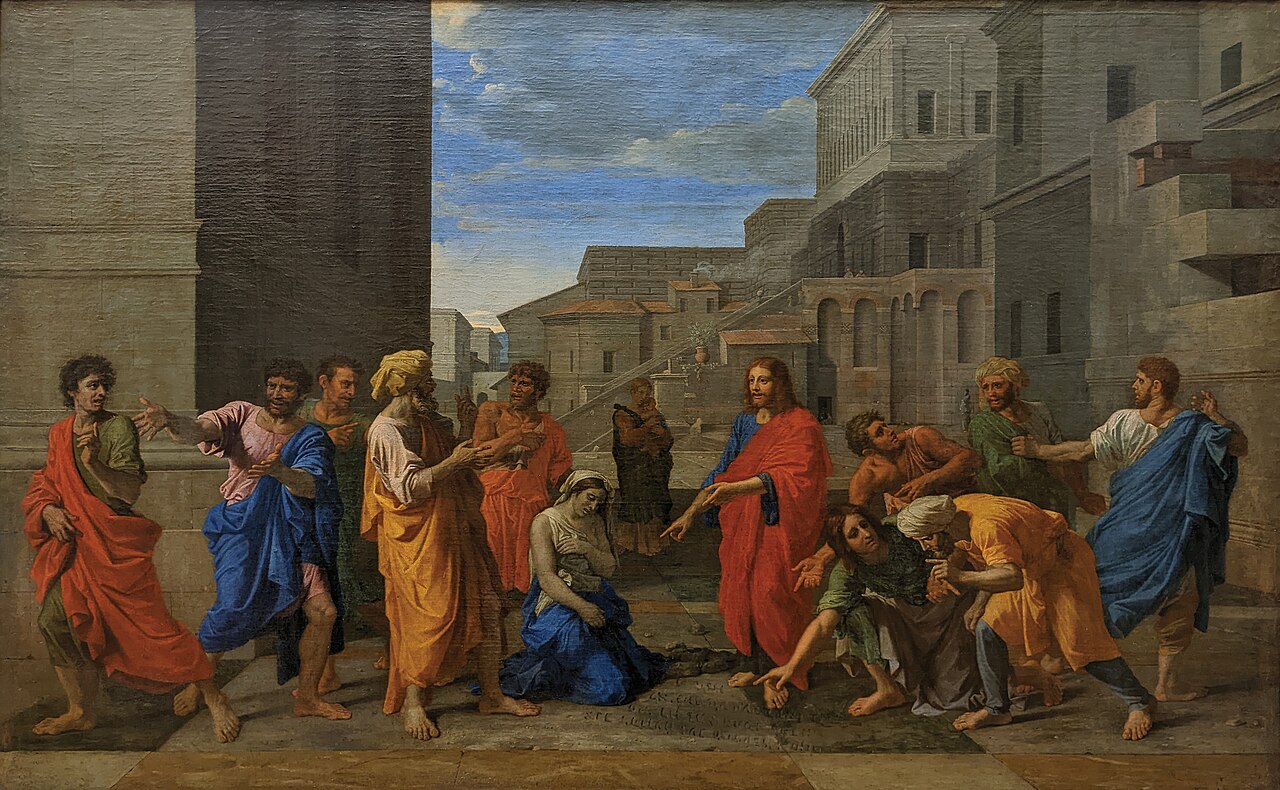
One by one, oldest first, they leave. And then the exchange that holds the whole gospel in miniature: the only person present who has the right to throw a stone — the sinless one — is the one who will not. "Neither do I condemn you; go, and from now on sin no more" (8:11). Notice he does not pretend the sin was nothing; he tells her to leave it. But grace comes first, and it is grace that makes the leaving possible. He does not clear her by lowering the standard. He simply refuses to be her executioner, and later he will take her stones, and ours, on himself.
3“I am the light of the world”
Now the second great ceremony of the feast. In the court where those towering lamps were lit each night, Jesus makes the claim they set up.
I am the light of the world. Whoever follows me will not walk in darkness, but will have the light of life.
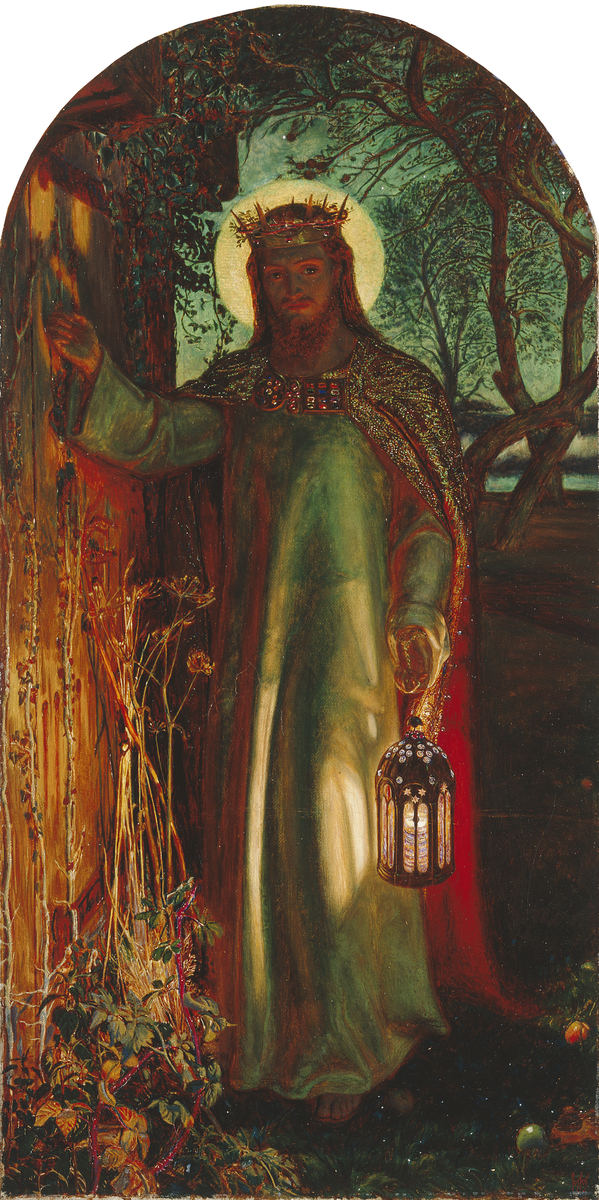
John 8:12The lamps of Tabernacles recalled the pillar of fire that led Israel through the wilderness dark. Jesus says he is the reality those lamps were imitating: the true light that has come into the world, exactly as the Prologue promised on the first page (1:4–9). And the offer is not merely to admire the light but to follow it — to fall in behind the pillar of fire and let it lead you out of the dark, "the light of life." We have watched people meet this light already: Nicodemus edging toward it out of the night, the woman at the well stepping into the noon of being known, a woman here dragged into it against her will and shown mercy. To all of them, and to us, the light says: stop stumbling; come, follow, and you will not walk in the dark again.
4“Before Abraham was, I am”
The rest of chapter 8 is a long, hardening argument, and it is worth reading with care, because it has been badly misused. Jesus tells those who had begun to believe that real discipleship means abiding in his word, and that it leads somewhere wonderful:
They bristle — we are Abraham's children, we have never been enslaved. Jesus presses the point that the deepest slavery is not political but moral: "everyone who practices sin is a slave to sin" (8:34), and only the Son can free a slave for good. The exchange grows sharp, all the way to Jesus saying that in refusing him they show whose children they really are. It is fierce language, and we have to hear it rightly.
This chapter contains some of John's hardest words, including Jesus telling his opponents, "You are of your father the devil" (8:44). Tragically, verses like these have been ripped from their setting and used to justify hatred of Jewish people — a use that is a grotesque betrayal of the text. A few things keep it straight. Everyone in this argument is Jewish: Jesus, his disciples, and the crowd. When John writes "the Jews," he most often means the ruling authorities in Jerusalem who opposed Jesus, not the Jewish people as a race. And the confrontation belongs to a long tradition of Israel's own prophets rebuking Israel's leaders in blistering terms — an in-house family argument, not a racial verdict. Jesus is a Jew calling his own people to their Messiah. To turn his words into a weapon against his own kinsmen is to invert their meaning entirely.
The argument climbs to its peak when Jesus says Abraham himself rejoiced to see his day. "You are not yet fifty years old," they scoff, "and have you seen Abraham?" And then the sentence that ends the debate and nearly ends his life:
ἐγώ εἰμιegō eimi · "I AM"
He does not say "before Abraham was, I was." He says "I am" — wrenching the grammar on purpose, because these are the words God spoke from the burning bush: "I am who I am… Say this to the people of Israel: 'I am has sent me'" (Exodus 3:14). Through this Gospel the phrase has been gathering weight — whispered on the water, offered to the woman at the well, filled with images of bread and light. Here it stands utterly bare, the divine name claimed outright. His hearers do not miss it for a second. They reach for stones, because in their ears he has just committed blasphemy — a man claiming to be the eternal God. Which is precisely what John has been telling us since verse 1 he is.
Where this leaves us
Water, light, and stones
Set the week end to end and the drama is stark. A festival poured out water and prayed for the Spirit; Jesus said the water is me. A festival blazed with light in memory of the pillar of fire; Jesus said the light is me. A trapped woman was hauled into the temple to be condemned; Jesus refused the stones and freed her instead. And when at last he spoke the very name of God over himself, the same crowd that had been celebrating reached down for stones of their own. That is the choice this whole Gospel keeps forcing, and it forces it here at the party's peak. Faced with the living water, the true light, the great I AM, there is no neutral ground. You come and drink. You follow the light. You fall down, or you pick up a stone. What you cannot do is stay a spectator at the feast.
Questions
- The feast begged God for water and Spirit; Jesus said, "come to me and drink." What thirst keeps driving you back to dry wells instead of to him? Reflect
- Jesus neither excused the woman's sin nor condemned her: "Neither do I condemn you; go, and sin no more." How do grace and the call to leave sin belong together, rather than cancel each other? Discuss
- "If the Son sets you free, you will be free indeed." Where are you still living as a slave to something Christ offers to free you from? Reflect
- Jesus calls following him "the light of life" — not just seeing the light but walking behind it. What would it look like to actually follow the light this week, not just admire it? Discuss
- "Before Abraham was, I am." Everyone at the feast had to do something with that claim. What have you done with it? Discuss