John 6 is the one sign the crowds loved and the one sermon that emptied the room. It is the only miracle reported in all four Gospels, the feeding of the five thousand, and John, as usual, cares less about the wonder than about what it means. So he lets the miracle stand and then spends the rest of the chapter drawing out its meaning, until a crowd of thousands has thinned to a faithful few. This is the chapter that separates people who want what Jesus can give from people who want Jesus, and it does so with the first of the seven great sayings that define this Gospel: I am the bread of life.
1The sign of the loaves
It is Passover time, and a vast crowd has followed Jesus up a hillside. There is no food, and the only supply in sight is a boy's small lunch: five barley loaves, the bread of the poor, and a couple of dried fish. Andrew brings it to Jesus, once again the man making an introduction, even as he admits how absurd it is: "what are they for so many?" But a little in the hands of Jesus turns out to be more than enough. Everyone eats "as much as they wanted," and the leftovers fill twelve baskets, one, it seems, for each disciple who had said it couldn't be done. Whatever we bring him, however small, is never the limiting factor.
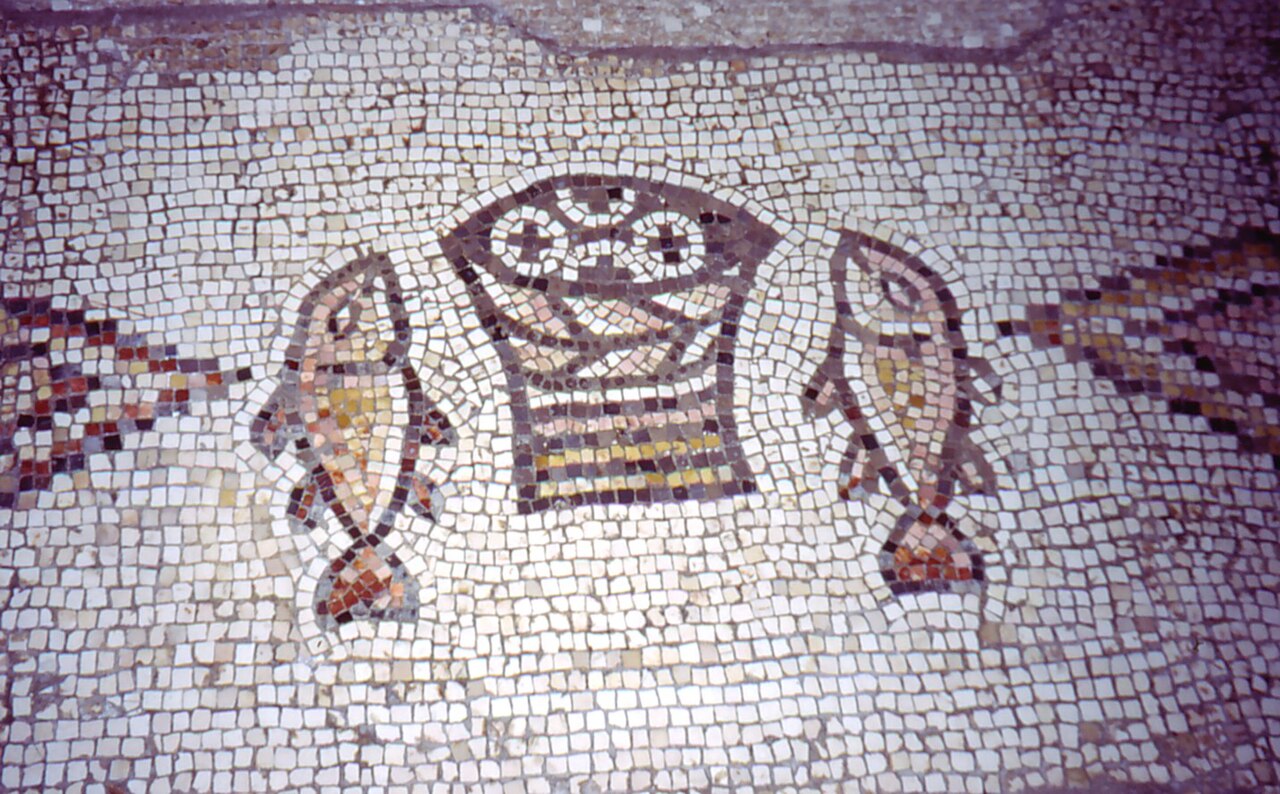
The crowd draws exactly the wrong conclusion. A man who can produce bread on demand is a man worth having in charge — so "they were about to come and take him by force to make him king" (6:15). It is a real temptation dressed as a compliment: the shortcut to a crown, a following built on full stomachs. Jesus withdraws alone to the mountain. He has not come to be the kind of king who keeps the bread coming; he has come to be the bread. The crowd cannot yet tell the difference, and most of them never will.
2“It is I” on the water
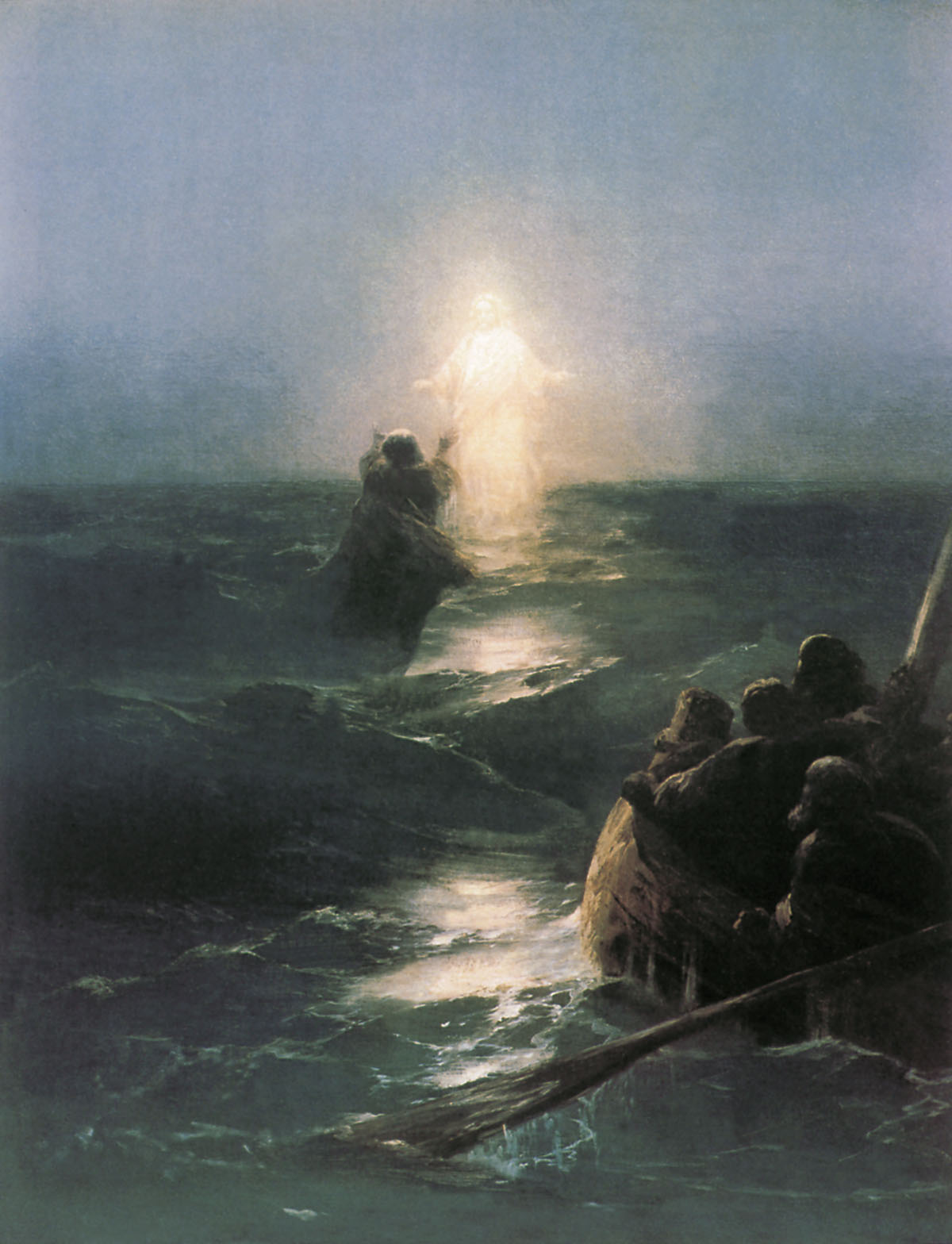
That night the disciples row into a headwind, and Jesus comes to them across the open water. John reports it almost without comment, but the picture is loaded. In the Old Testament, treading on the waves of the sea is something only God does — "who alone… trampled the waves of the sea," says Job; "your way was through the sea… yet your footprints were unseen," sings the psalmist. To walk on the water is to do a God-thing. And the words Jesus speaks into their fear are, in Greek, simply egō eimi — "I am." It reads naturally as "it is I, it's me," and it is also the divine name breaking over the water. The One who feeds thousands from a boy's lunch is the same One who walks the sea as its Lord.
3“I am the bread of life”
The next day the crowd tracks him down, and Jesus names their motive without flinching: "you are seeking me… because you ate your fill of the loaves" (6:26). They want the caterer, not the Christ. So he tries to lift their eyes from the food that runs out to the food that lasts.
They answer by asking for a sign — and, remarkably, cite the manna: Moses gave our fathers bread from heaven in the wilderness; what will you do? Jesus corrects them on two counts. It was not Moses who gave the manna but God; and the manna, for all its wonder, only kept people alive one more day before they were hungry again, and it never kept anyone from dying. There is a truer bread from heaven, he says, and then, for the first time in this Gospel, he fills the divine "I am" with an image.
I am the bread of life; whoever comes to me shall not hunger, and whoever believes in me shall never thirst.
John 6:35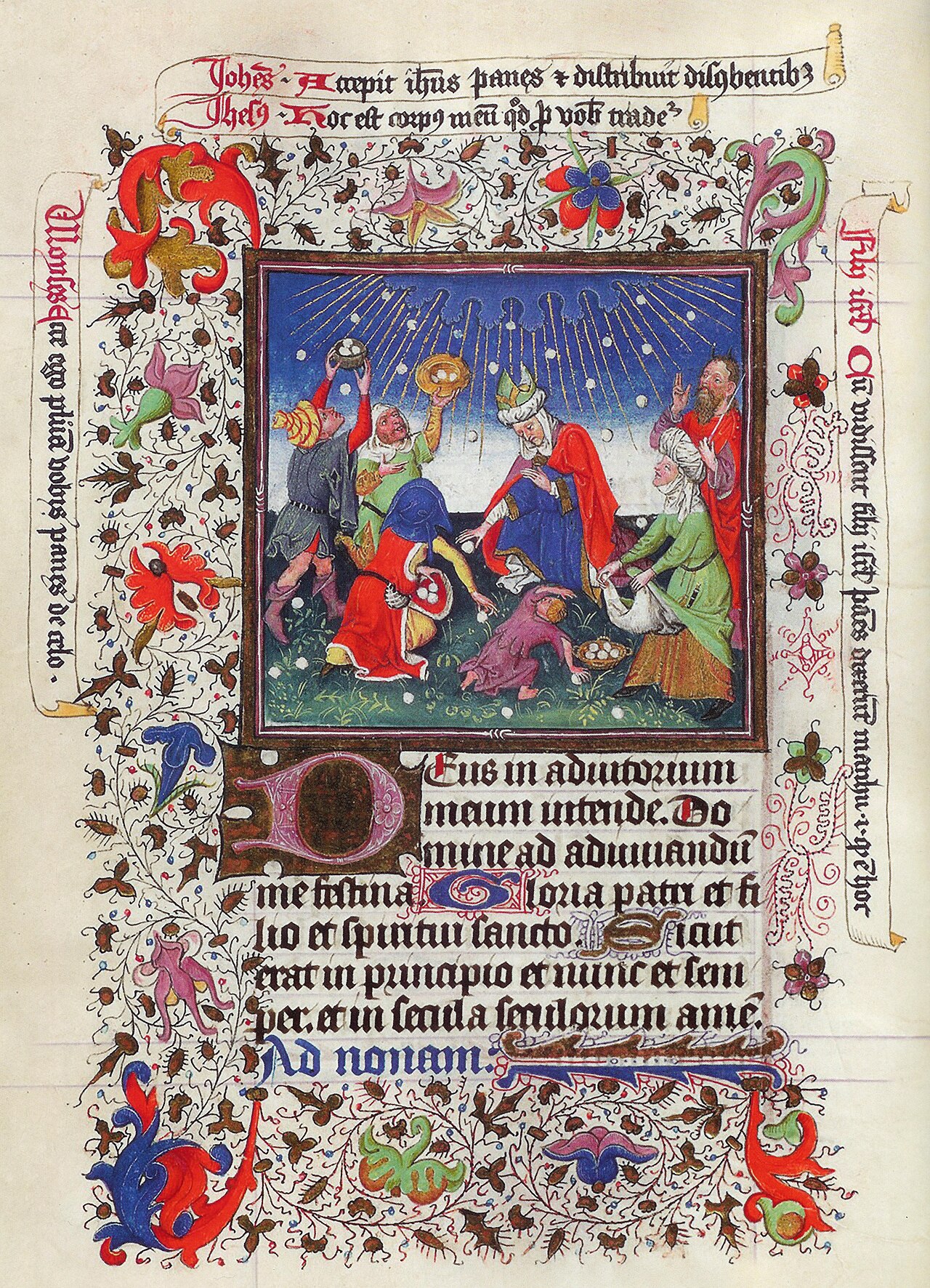
ἐγώ εἰμιegō eimi · "I am"
"I am the bread of life" is the first of seven sayings in John where Jesus takes the words egō eimi — the name God gave himself at the burning bush, "I am who I am" (Exodus 3:14) — and joins them to an image: bread, light, door, shepherd, resurrection, way, vine. Each one says two things at once. It claims the divine name, and it tells you what this God is for you. Here: the God who is, is bread — the thing you cannot live without, freely given, meant to be taken in. And the way you "eat" this bread is spelled out in the same verse: you come to him, you believe in him. Faith is the eating.
The manna in the wilderness was always pointing forward to a truer bread. Trace the loaf from the desert to the Lord's table:
4A hard saying
Then Jesus presses the image to a place that scandalizes everyone listening. This bread, he says, is his own flesh, "given for the life of the world" (6:51) — and to have life you must eat it.
The language is deliberately jarring, and Jesus does not soften it. He is not commending cannibalism, and he is not, at this point in the story, describing a ritual — the Lord's Supper does not exist yet. He is pressing the bread image to its limit to make one thing unmistakable: you cannot merely admire this bread from a distance; you have to take it in, make it part of you, live off of it. And the mention of flesh "given" and blood "drunk" points unmistakably to the cross, where his body would be broken and his blood poured out for the life of the world. Christians ever since have rightly heard the Lord's Supper humming in the background of these words, because the Supper dramatizes exactly what Jesus is teaching: that we live by feeding on a crucified Savior. But the eating he calls for here is, at root, the same thing he named in verse 35 — coming to him, believing in him, receiving him so entirely that he becomes your very life.
It is too much for most of them. "This is a hard saying; who can listen to it?" (6:60). And here comes the winnowing this whole chapter has been driving toward.
Notice that Jesus makes no attempt to call them back or to trim the teaching to keep his numbers up. He lets the crowd go, and then turns to the Twelve with a question that is almost an invitation to leave too: "Do you want to go away as well?" Peter's answer is one of the great confessions of the Gospels, and its honesty is what makes it beautiful. He does not say, "we understand it all now." He says, in effect, where else is there to go? "You have the words of eternal life." That is often what real faith sounds like when a teaching is hard and the easy crowd has thinned: not that every difficulty is resolved, but that we have tasted enough of Christ to know there is nowhere better to go.
Where this leaves us
Two hungers
The whole chapter turns on the difference between two hungers, and it is a difference we feel every day. The crowd was hungry for bread that fills the stomach, for a God who solves the problem in front of them and keeps the supply coming. Jesus kept trying to wake a deeper hunger in them, a hunger for the bread that ends every other ache, a hunger for himself. The tragedy of John 6 is not that the crowd wanted too much from Jesus. They wanted too little. They would have settled for lunch and a king when he was offering to be their life. The sifting still happens. When following Jesus stops being useful, when the free bread runs out and the sayings get hard, the crowd thins. What is left is people who have tasted enough of him to say, with Peter, that leaving is unthinkable. Not because it is all easy, but because he alone has the words of eternal life.
Questions
- A boy's small lunch fed thousands. What "laughably small" thing do you hesitate to bring to Jesus because it seems too little to matter? Reflect
- The crowd wanted the bread Jesus could give more than they wanted Jesus. Where do you catch yourself seeking what God can do for you rather than God himself? Discuss
- "I am the bread of life" — and the eating is coming and believing. What does it mean, practically, to "feed on" Christ rather than just admire him? Discuss
- Jesus let the crowd leave rather than soften a hard teaching. How does that challenge the way we sometimes want faith made easy and popular? Discuss
- "Lord, to whom shall we go?" Peter stayed not because everything made sense but because leaving was unthinkable. Have you ever stayed with Christ on that basis — and what did it teach you? Reflect