Something shifts in this chapter, and you can feel it. Up to now the opposition has only muttered: a delegation questioning the Baptist, officials demanding a sign in the temple. From John 5 on, it turns deadly. A single act of mercy on the wrong day of the week lights a fuse that burns through the rest of the Gospel. But John is not mainly interested in the politics. He is interested in what Jesus says once the accusation is on the table. Defending himself, Jesus makes his boldest claims yet about who he is. He does what only God does. He gives life and passes judgment. And the whole Old Testament, he says, has been pointing at him all along.
1“Do you want to be healed?”
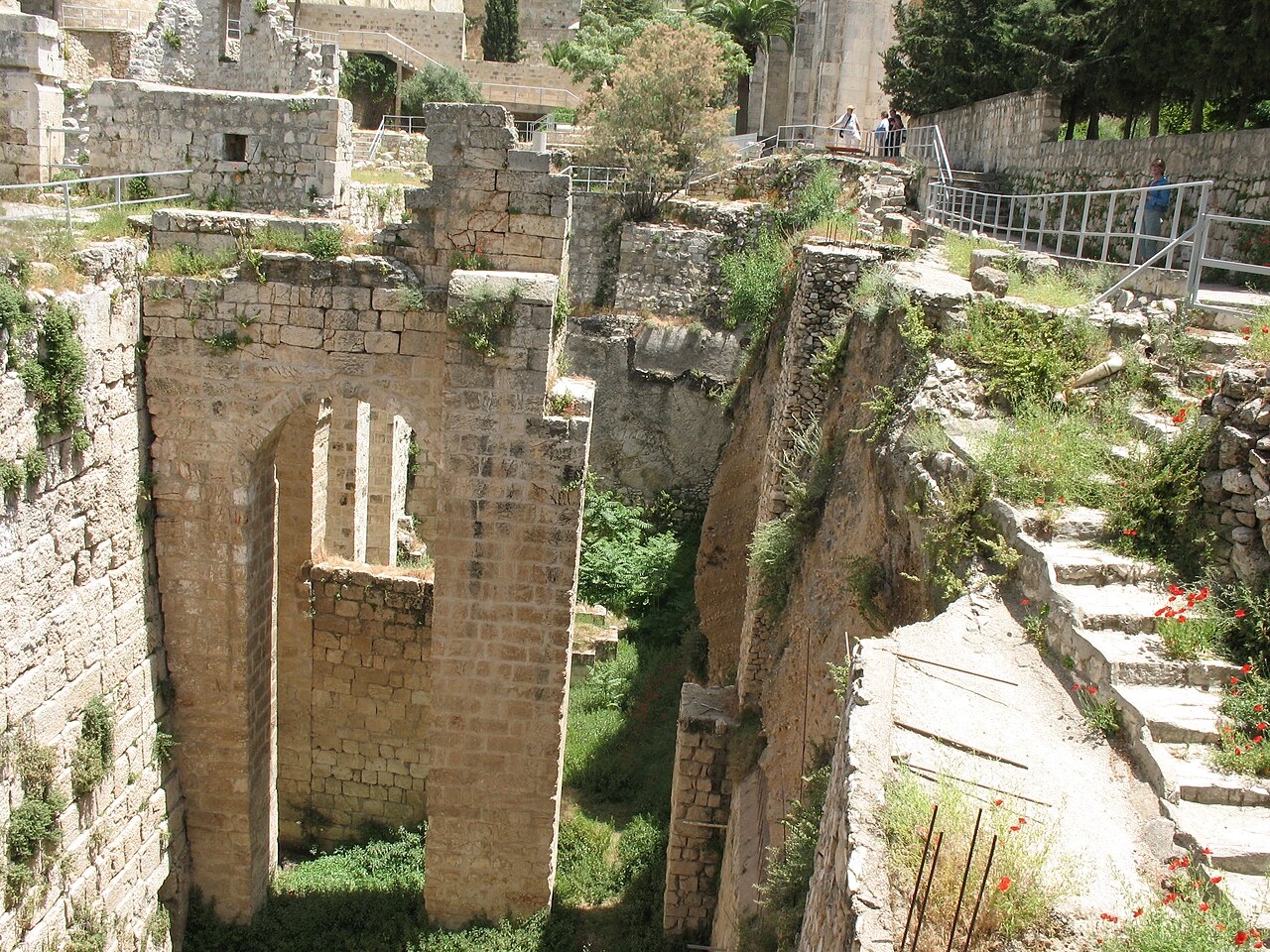
The scene is a pool by the Sheep Gate, ringed with five covered porches and crowded with "a multitude of invalids." There was a folk belief that when the water stirred, the first one in was healed, which made this pool the cruelest place in the city for a man who could not move fast. For thirty-eight years he had been beaten to the water every time. Jesus picks him out of the crowd and asks a question that sounds almost unkind at first: "Do you want to be healed?" After nearly four decades, the answer is not as obvious as it seems. Helplessness can become an identity, and the man's reply is not "yes" but a tired list of why it will never work for him. Jesus does not argue with the excuse. He gives a command that makes it irrelevant, "get up," and the power to obey comes with the command.
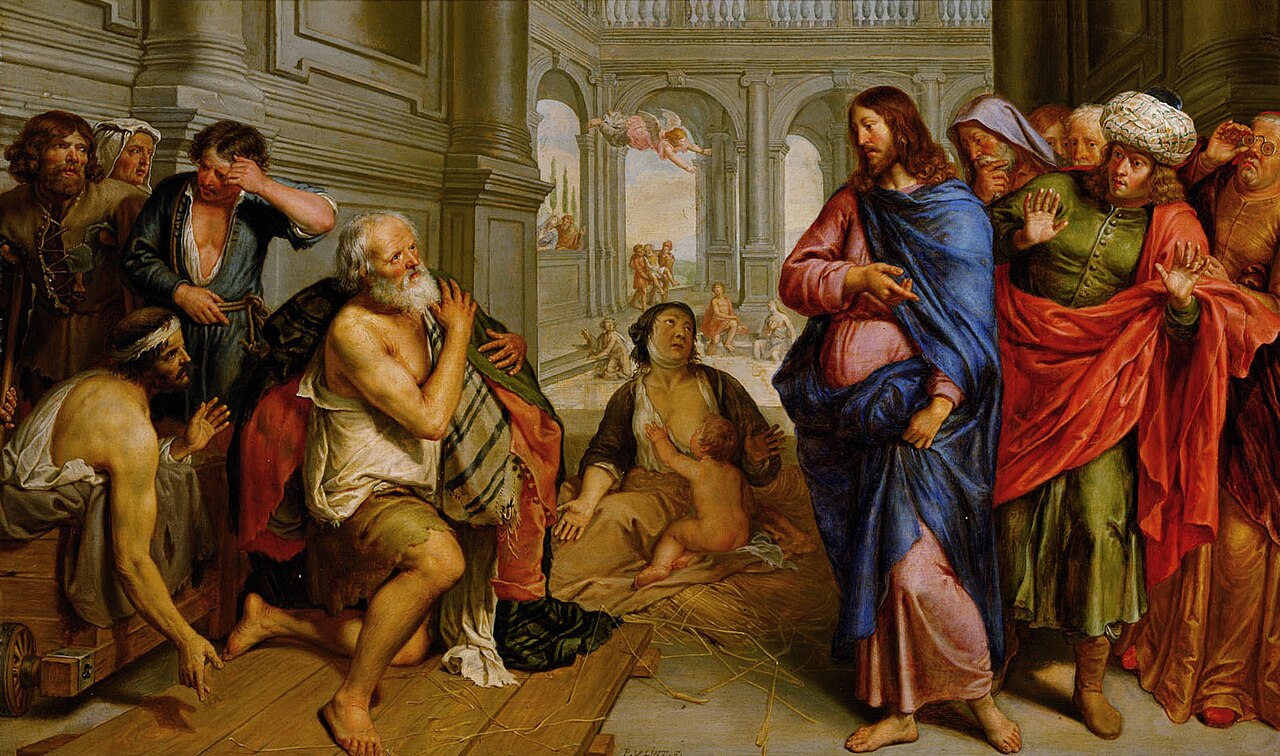
When Jesus finds him later in the temple, he adds a strange, sober word: "See, you are well! Sin no more, that nothing worse may happen to you" (5:14). Jesus is not saying the man's paralysis had been punishment for some particular sin — elsewhere he explicitly denies that reasoning (9:3). He is saying that as bad as thirty-eight years of paralysis was, there is something worse than a ruined body, and it is a ruined soul. The healing of the legs was the smaller mercy. The man had better not miss the larger one now standing in front of him.
2“My Father is working”
The healed man walks off carrying his mat, and immediately runs into a wall of objection: it is the Sabbath, and carrying a load is work. Never mind that a man paralyzed for a generation is walking; the rule-keepers can only see a violated regulation. When they learn Jesus is behind it, they turn on him, and his answer pours fuel on the fire.
His logic is razor-sharp. God rested on the seventh day of creation, yes — but no one thinks God stopped sustaining the universe on Saturdays. The rain still falls, hearts still beat, life is still upheld on the Sabbath, because God never clocks out from the work of giving and preserving life. "My Father is working until now," Jesus says, "and I am working" — claiming for himself the exact prerogative that belongs to God alone. His opponents are not stupid. They hear precisely what he is saying, and John spells out the stakes for us: they wanted to kill him because "he was even calling God his own Father, making himself equal with God." This is the hinge the whole Gospel turns on. The charge against Jesus was never merely that he broke a rule. It was that he claimed to be God, and everyone in the room knew it.
In the very next breath Jesus says, "the Son can do nothing of his own accord, but only what he sees the Father doing" (5:19). Read carelessly, that sounds like a step down — as if the Son were a lesser being taking orders. It is the opposite. Jesus is describing a unity so total that the Son never acts independently of the Father, never freelances, never does anything but what the Father is doing. It is the language of a perfect Son who is one with his Father in will and work, not a subordinate deity. The church would later put it precisely: equal in nature, distinct in person, one in purpose. John gives us the raw material here — a Son who claims equality with God and, in the same breath, perfect obedience to him, with no contradiction between the two.
3The Son who gives life
What follows is the first of the great discourses in John, and its subject is breathtaking: the authority the Father has handed to the Son. The Son gives life to whomever he will. The Father has committed all judgment to the Son, so that everyone must honor the Son exactly as they honor the Father. And then this, quiet and enormous:
Notice the tense. Not "will pass" from death to life someday, at the end — "has passed," already, now. For the person who hears and believes, the great migration from death to life is not a future hope but an accomplished fact. The final judgment holds no dread for them, because the verdict is already in. Jesus goes on to say that a day is coming when the dead will literally hear his voice and rise (5:28–29), but he insists the decisive resurrection has already begun — every time a spiritually dead person hears his word and comes alive. The voice that will one day empty the graves is the same voice that got a man off his mat, and that raises the dead in us when we believe.
4The witnesses on the stand
These are staggering claims, and Jesus knows it. So he does what an honest witness does: he calls corroboration. Under the Law, a claim stood on the testimony of two or three witnesses, and Jesus lines up not two but four besides himself. There is John the Baptist, "a burning and shining lamp" (5:35). There are the works the Father has given him to do, which testify that the Father sent him. There is the Father himself. And there are the Scriptures — and it is here that Jesus lands his sharpest, saddest word.
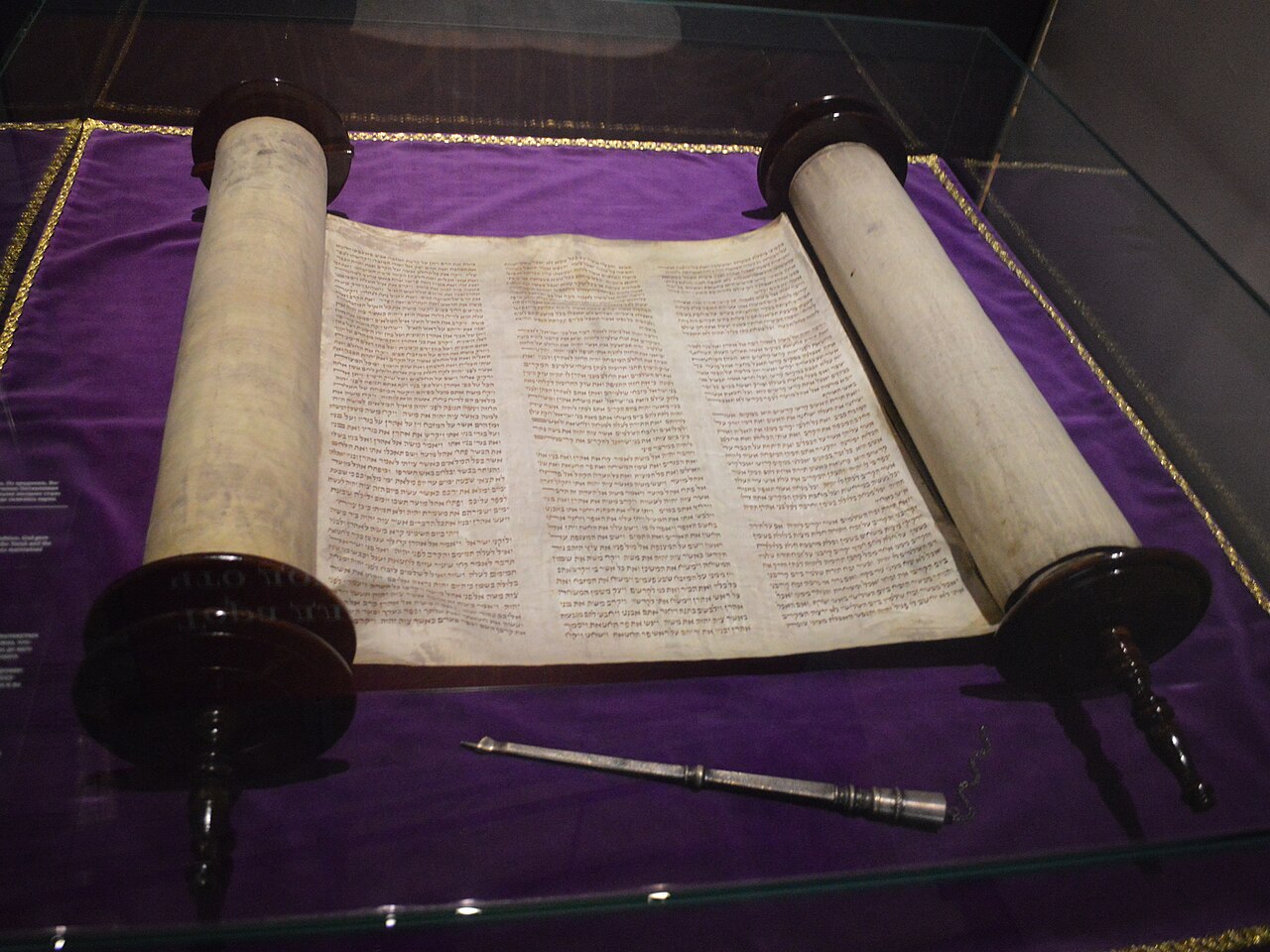
Here is one of the most important things Jesus ever said about the Bible, and it is a warning as much as a claim. His opponents were not casual about Scripture; they "searched" it, poring over every letter, sure that eternal life was to be found in mastering the text. And Jesus tells them they have missed the whole point. The Scriptures are not an end in themselves; they are a witness, a signpost, and the One they point to was standing right there. It is possible to know the Bible cold and refuse the Christ it is about. "You refuse to come to me that you may have life" — the tragedy is not ignorance of Scripture but knowing it thoroughly and stopping short of the Person at its center. He drives the point all the way home: "If you believed Moses, you would believe me; for he wrote of me" (5:46). The Law they revered was his advocate, not his rival.
Jesus' claim that all of Scripture testifies to him is one of the great keys to reading the Old Testament. Follow how the New Testament reads the Bible as a book about Christ:
Where this leaves us
Two ways to miss the point
This chapter holds up two very different people, and both are in danger of missing the same thing. There is the man at the pool, worn down by thirty-eight years into a kind of resigned helplessness, who has to be asked whether he even wants to be well. And there are the scholars, so devoted to the sacred text that they cannot see the living Word it describes standing in front of them. One is paralyzed in body. The others are paralyzed in a subtler way, held back by a religion of the text that never arrives at the Person. To both, and to us, the chapter puts the same quiet question underneath its opening line. Do you actually want to be made well? The life on offer here is not a doctrine to master or a text to search. It is a Person to come to. "You refuse to come to me that you may have life." It all turns on that one small verb: whether, knowing all we know, we will finally come.
Questions
- "Do you want to be healed?" After years of a problem, we can grow strangely attached to it. Is there something in you that has become a settled identity you're not sure you want to give up? Reflect
- Jesus healed a man's legs and then warned him of something "worse." What does it mean that the ruin of the soul is a graver danger than the ruin of the body? Discuss
- "Has passed from death to life" — already, now, for the one who believes. How would living as though the verdict is already in change the way you face fear or failure? Reflect
- Jesus tells devoted Bible students they've missed the point of their own book. How do you guard against loving Scripture as an end in itself rather than as a witness that brings you to Christ? Discuss
- The whole chapter turns on the words "come to me." What, honestly, keeps you from coming — not knowing enough, or not wanting to enough? Discuss