Every Gospel tells of the arrest and trial, but John tells it his own way, and the difference is everything. There is no agonized wrestling in the garden here, no sweat like blood; John has already given us that struggle back in chapter 12 ("now is my soul troubled") and settled it. What he shows us instead is a Jesus utterly in control of his own passion — walking toward the arresting party rather than fleeing, protecting his friends, correcting Peter's sword, and standing before the most powerful man in the province as if the man on trial were Pilate. From here to the cross, do not picture a helpless figure swept along by events. Picture a King, going of his own will to a throne shaped like a cross.
1“Whom do you seek?”
A cohort of soldiers and temple guards comes out with torches and weapons to seize one unarmed teacher — and it is Jesus who takes charge of the scene. He does not wait to be found; he "came forward" and asks whom they want. And when he answers, "I am he," the Greek is once again egō eimi, the divine "I am" that has been gathering force since the woman at the well. For one flickering instant its full weight shows, and an armed detachment "drew back and fell to the ground." No one arrests this man who does not first permit it. He could have spoken that word and walked away. Instead he uses his command of the moment to shield the others: "if you seek me, let these men go" (18:8) — the shepherd, to the last, standing between the wolves and his sheep. When Peter draws a sword and takes off a servant's ear, Jesus stops him with a question that reframes the whole night: "shall I not drink the cup that the Father has given me?" This is not a tragedy happening to Jesus. It is a cup he has chosen to drink.
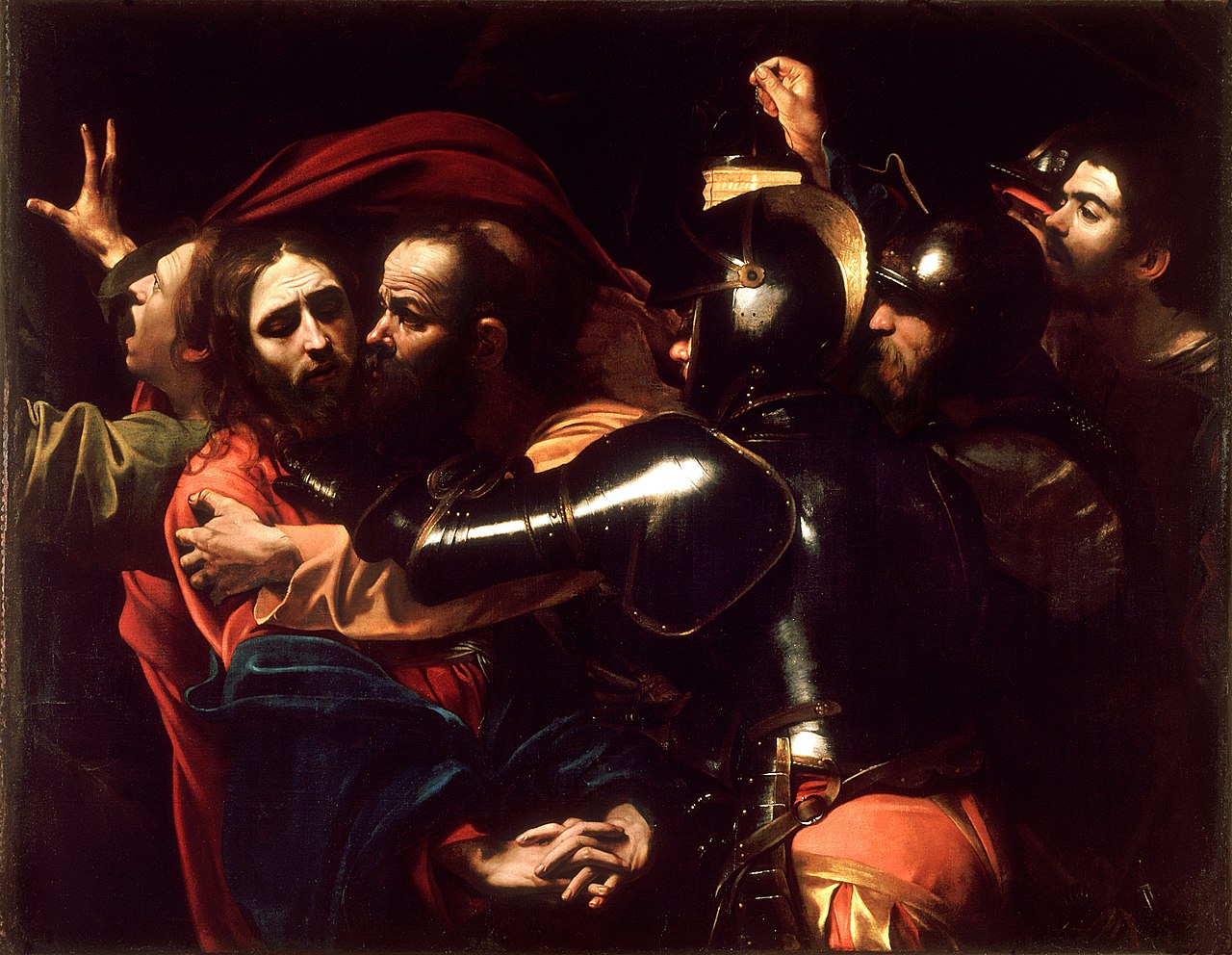
2“I am not”
John now does something deft with the editing. He cuts back and forth between two rooms. Inside, Jesus stands before the high priest and testifies openly and without fear. Outside, in the courtyard, Peter stands warming himself at a charcoal fire, and crumbles.
Set the two side by side and the tragedy is exact. Inside, Jesus says egō eimi — "I am." Outside, three times, Peter says ouk eimi — "I am not." The Lord confesses; the disciple denies. And it is a servant girl, not a soldier, who topples the man who had sworn hours earlier that he would lay down his life. Peter is not undone by torture but by a teenager's question at a fireside. John does not moralize; he just lets the rooster crow and moves on. But he has quietly shown us the distance between our bravado and our courage, and how small a thing it takes to expose it. Remember that charcoal fire. Jesus will build another one, on a beach, in chapter 21, and use it to put Peter back together.
3“What is truth?”
By dawn Jesus stands before Pilate, and the conversation turns, as everything in John does, to identity and truth. Pilate wants to know if this is a rebel king. Jesus answers on a different plane.
His kingdom is real — he does not deny being a king — but it does not run on the world's fuel. It does not advance by swords (he just told Peter to sheathe his) or by seizing the levers of power. It comes, paradoxically, through the King being handed over and lifted up. Then Jesus says why he came, and it is pure John: "For this purpose I have come into the world — to bear witness to the truth. Everyone who is of the truth listens to my voice" (18:37). And Pilate gives the most famous shrug in history.
What is truth?
John 18:38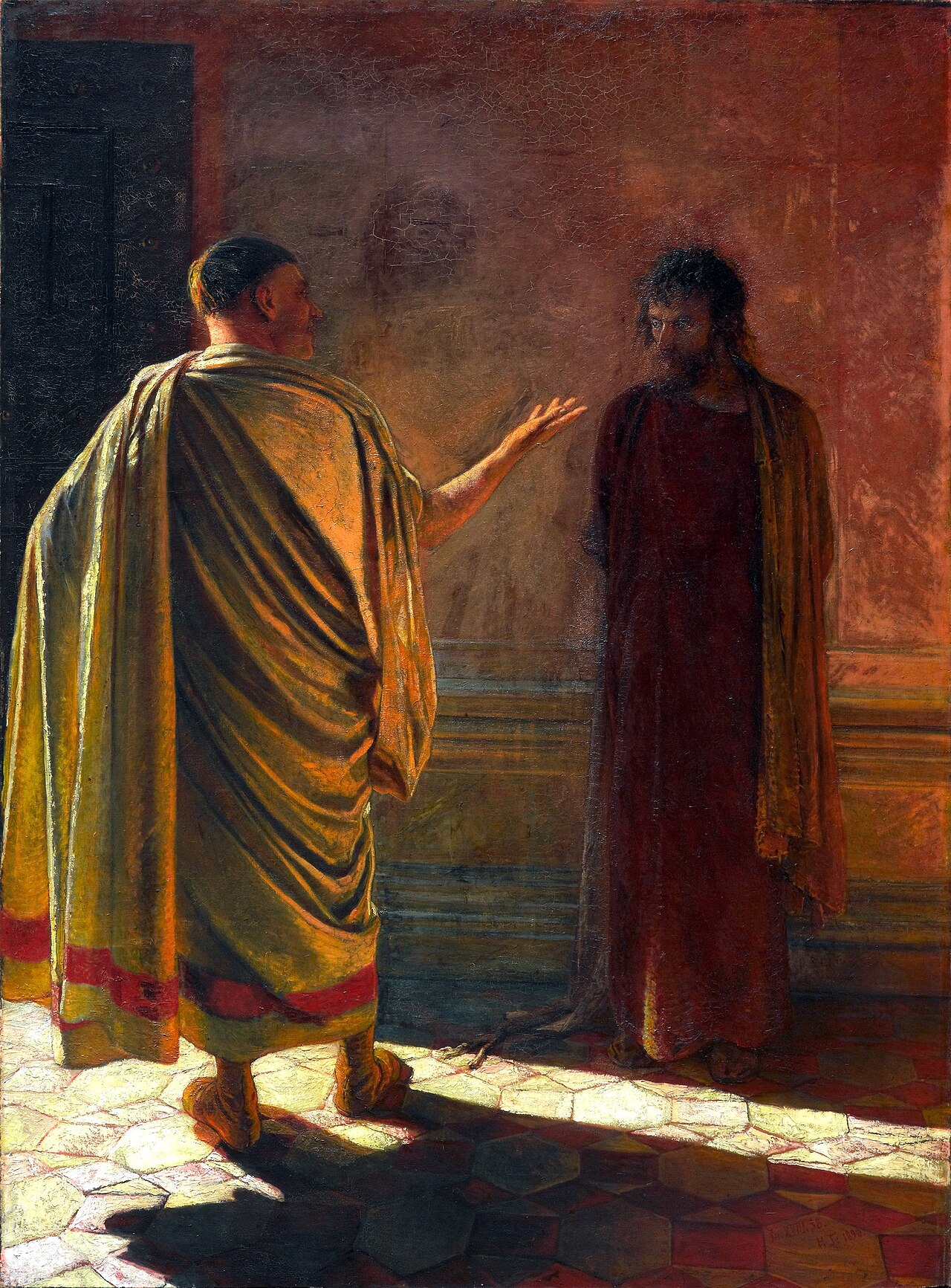
It is one of the saddest lines in Scripture, and its sadness is in the timing. Pilate asks "What is truth?" while Truth in person stands bound before him — and he does not wait for an answer. He turns and walks out. He is not really asking; he is dismissing, the way a cynical, tired official waves off a word too costly to deal with. Pilate is the patron saint of everyone who keeps the question of Jesus at arm's length by treating it as unanswerable. The truth was close enough to touch. He preferred the exit.
Then Pilate offers the crowd a choice that becomes a picture of the gospel without anyone intending it. He proposes to release a prisoner, and they choose Barabbas, "now Barabbas was a robber" (18:40), a genuine insurrectionist and, the other Gospels tell us, a murderer. So a guilty man walks free while the innocent one is condemned in his place. Barabbas never stood at the cross to thank anyone. He simply woke up that morning on death row and went to bed a free man because someone else took his cross. He is the first in a very long line. That exchange, the guilty released and the innocent condemned, is exactly what is about to happen for the whole world.
Where this leaves us
The King in chains
Nothing in this chapter is out of Jesus' hands, and that is the point John most wants us to see. He walks into the arrest; he could have spoken and been free; he chooses the cup. Even bound and beaten and shuttled between hearings, he is more sovereign than the governor who holds his life. And around that still center, the chapter arranges everyone else by how they respond to him. Peter, who loves him, denies him at a fireside and learns how weak his own courage is. Pilate, who is intrigued by him, dodges the truth and washes his hands of the decision. Barabbas, who never asked for anything, simply receives a freedom bought by another's condemnation. We are somewhere in that lineup. The question the chapter leaves is not whether Jesus is in control — he plainly is — but which of these figures we resemble when the King in chains stands in front of us and asks, in effect, what we will do with the truth.
Questions
- John shows Jesus in complete command of his own arrest. How does it change your view of the cross to see it as chosen, not merely suffered? Discuss
- Peter fell not to a soldier but to a servant girl's question. What small, unthreatening pressures most easily lead you to hide that you belong to Jesus? Reflect
- Pilate asked "What is truth?" and walked away without waiting. Where are you tempted to treat the question of Jesus as unanswerable so you don't have to answer it? Reflect
- Barabbas went free because the innocent one was condemned in his place. How does putting yourself in his sandals deepen the meaning of the cross for you? Discuss
- "My kingdom is not of this world." Where do we still expect Jesus' kingdom to advance by the world's methods — power, force, winning — rather than his? Discuss