"On the first day of the week." John's very first words about the resurrection quietly announce a new beginning: a new week, a new creation, the world starting over in a garden while it is still dark. Everything the Gospel has promised now comes due: the temple raised in three days (2:19), the Good Shepherd taking up his life again (10:18), the grain of wheat rising as a harvest (12:24), the resurrection and the life proving he is exactly what he said (11:25). And John tells it not as a distant rumor but as a series of close, particular encounters, a woman in a garden and a doubter in a locked room, that build to the highest confession in the entire Gospel and then turn, suddenly, to face us.
1The stone taken away
Mary Magdalene comes to the tomb before sunrise and finds it open. She runs to Peter and the beloved disciple, and the two men race to see. What they find is not a plundered grave but something stranger and more telling.
John, an eyewitness, lingers over a detail no grave-robber would leave and no invented story would bother with: the graveclothes were still there, lying undisturbed, and the face-cloth was neatly folded by itself. Thieves do not unwrap a body and tidy up. And here is a quiet echo worth catching. When Lazarus came out of his tomb, he came still bound "hand and foot with linen strips" (11:44), needing to be unwrapped, because he would need those graveclothes again someday. Jesus left his behind, folded and empty. Lazarus was resuscitated to die once more; Jesus was raised to die no more, and he did not need the wrappings of death anymore. The beloved disciple takes one look at that empty, orderly linen "and believed." He did not yet fully understand the Scriptures (20:9); he simply saw, and knew.
2“Mary”
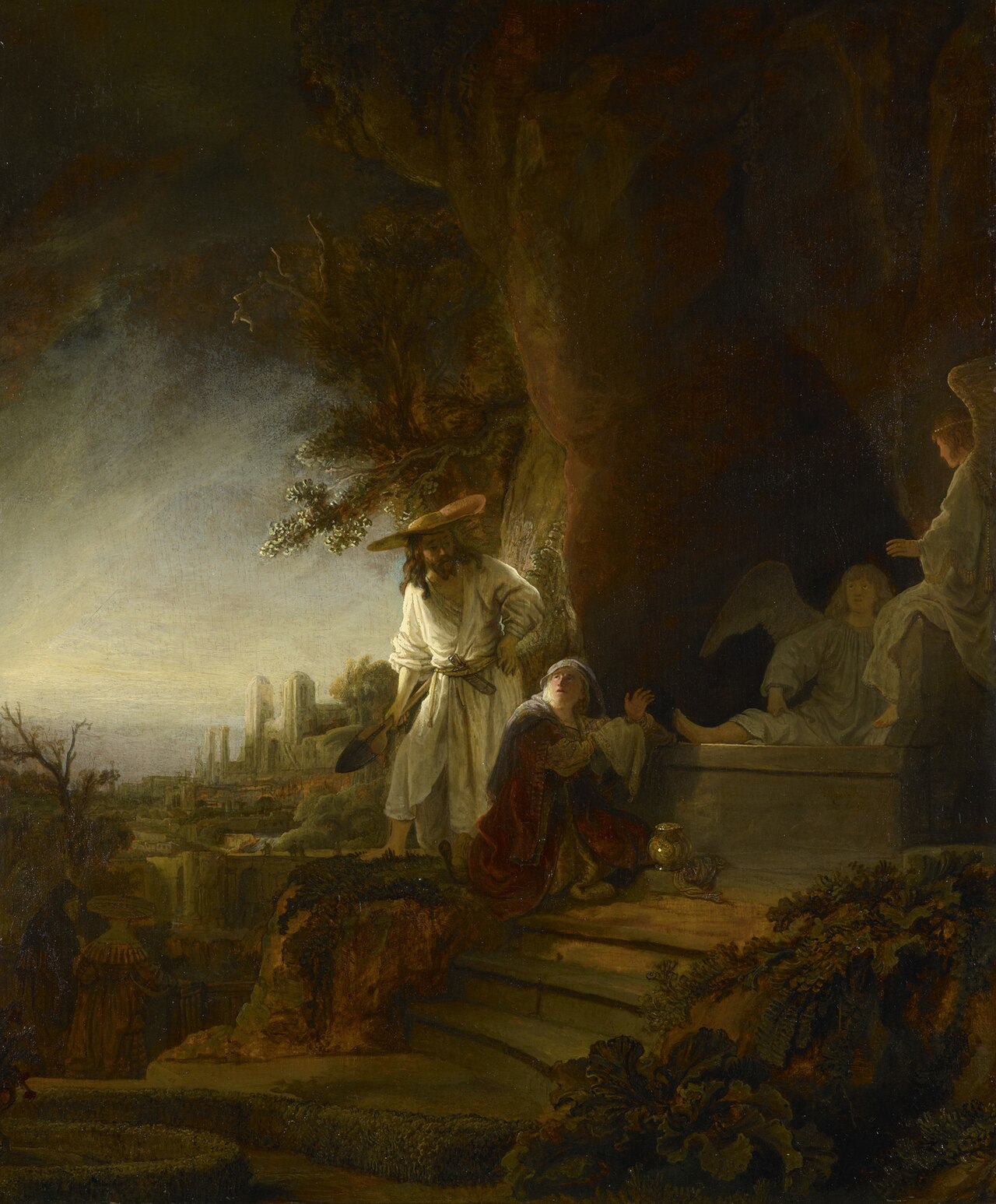
The men go home, but Mary stays, weeping at the tomb. Through her tears she sees a man she takes to be the gardener — a lovely mistake, since in a sense he is: the new Adam in a new garden, come to undo the ruin of the first. He asks her the two questions this Gospel has been asking all along: "Why are you weeping? Whom are you seeking?" And then he says one word that changes everything.
He does not launch into an explanation. He simply says her name. And that is all it takes, because the Good Shepherd "calls his own sheep by name" (10:3), and the sheep know his voice. She had been staring straight at him without recognizing him; the moment he speaks her name, she knows. There is the whole doctrine of grace in a single word. We do not first find him by our searching. He finds us, and calls us by name, and our recognition is the answer to his voice. Then comes the gentle "do not cling to me," not a rebuke but a redirection. She cannot keep him to herself in the garden; there is news to carry. And the news is staggering: "go to my brothers." He calls these deserters his brothers now, and sends word: "I am ascending to my Father and your Father, to my God and your God" (20:17). Through his death and rising, his Father has become their Father. Mary Magdalene, out of whom he once cast seven demons, becomes the first person to preach the risen Christ.
3“Peace be with you”
That evening he comes to the eleven, and the first thing the risen Christ says to the men who abandoned him is not reproach but "Peace be with you." He shows them the wounds. The risen body still bears the scars of the cross, forever proof of how they were loved. Then he repeats the blessing and commissions them: as the Father sent me, I am sending you. The mission is not theirs to invent; it is his, handed on. And he breathes on them, the same word used when God "breathed into" Adam the breath of life (Genesis 2:7), and says, "Receive the Holy Spirit." It is a deliberate act of new creation. The One who is the resurrection breathes new life into his people, the down payment of the Helper he had promised. A frightened, locked-up little band is being turned, by his breath, into the sent church.
4“My Lord and my God!”
Thomas was not there, and he refuses to take it on anyone's word: unless he sees and touches the wounds himself, he will not believe. We are hard on him — "doubting Thomas" — but he only wants what the others already got: to see the risen Lord with his own eyes. A week later, Jesus gives him exactly that.
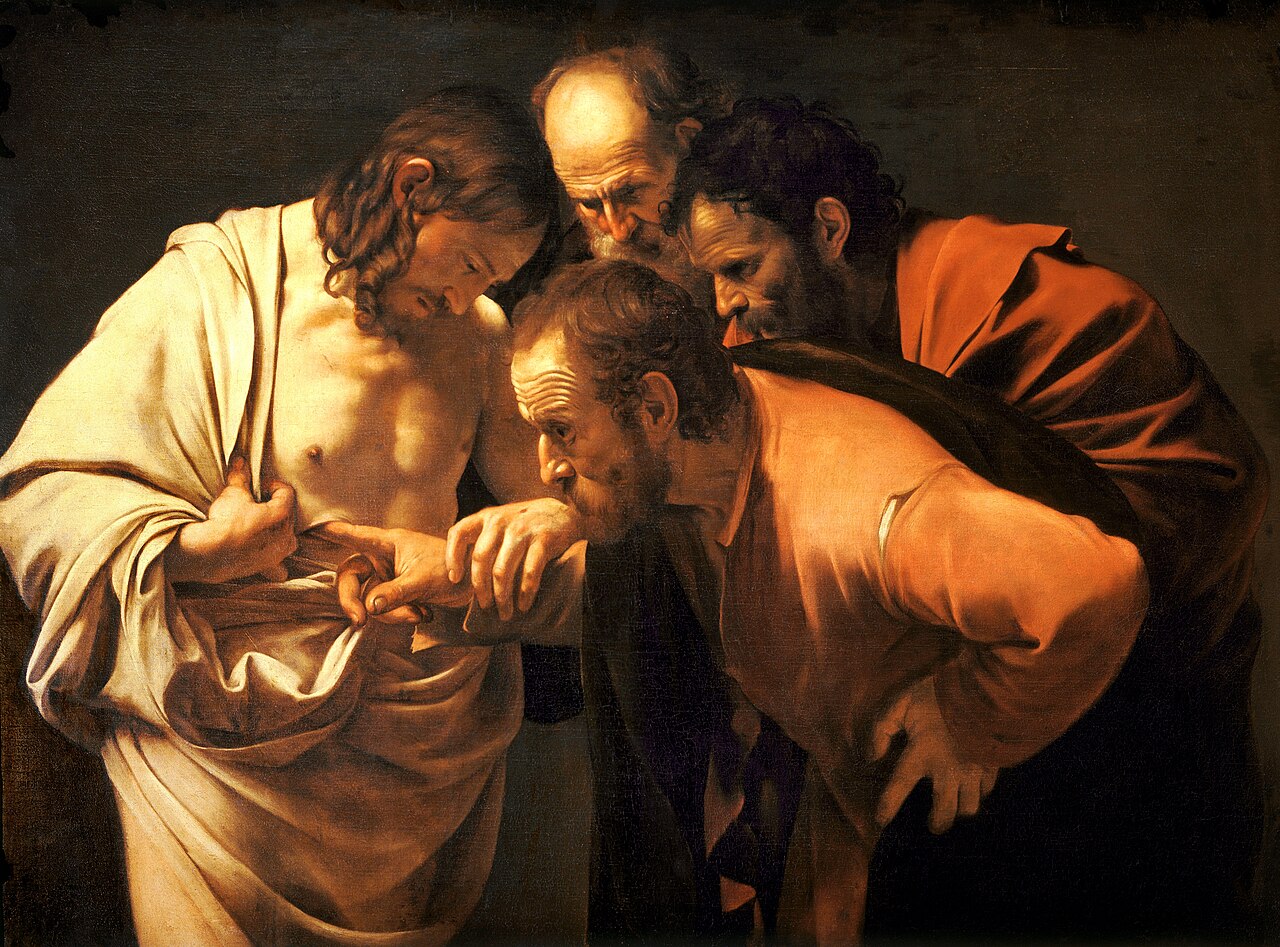
"My Lord and my God!" It is the greatest thing anyone says in this entire Gospel, and John has placed it here for a reason. Cast your mind all the way back to the first sentence: "the Word was God" (1:1). The book opened by telling us who Jesus is; now, at its climax, a man who once doubted falls down and confesses it to Jesus' face. The two statements bracket the whole Gospel like bookends — what John declared in the prologue, Thomas confesses at the end. This is where the argument has been driving the entire time. And Jesus does not correct him, does not say "no, don't call me God." He receives the worship, and then turns from Thomas to speak, across the centuries, to us.
Have you believed because you have seen me? Blessed are those who have not seen and yet have believed.
John 20:29That beatitude is for everyone who would ever read this book. Thomas believed because he saw. We will not see, not yet — and Jesus calls us blessed for believing anyway, on the strength of the testimony rather than the sight. It is his benediction on the faith of every generation after the eyewitnesses. Which is exactly why John tells us, in the very next breath, why he wrote all this down.
5Why this was written
Here, at the end, John states his purpose out loud — the sentence we hung at the very start of this study, because everything in the book serves it. He did not write a neutral biography. He chose these particular signs, out of many, as evidence, and he laid them before us like a case before a jury, for one reason: "so that you may believe… and that by believing you may have life in his name." The whole Gospel has been an argument aimed at a verdict, and the verdict is ours to render. Thomas saw and believed and was blessed. We have not seen — but we have this book, this testimony, and the promise that believing on its strength is itself a blessed thing. The signs were written for us. The life is offered to us. All that remains is to believe.
Where this leaves us
Called by name, sent by his breath
The resurrection in John is not a spectacle staged for a crowd; it is a series of personal meetings. He calls a weeping woman by her name and turns her grief to joy. He walks through a locked door to breathe peace on the men who ran away. He lets a stubborn doubter touch his scars and receives his worship. In every case the risen Christ comes to particular, frightened, failing people and makes them new. That is still how he comes. And John, having shown us the empty tomb and the pierced hands and the great confession, finally sets the book down and looks straight at the reader. Everything he wrote, he wrote for this: that you would believe, and believing, have life. The tomb is empty. The Lord is risen. He knows your name. The only thing the whole Gospel asks of you is the thing Thomas finally did — to stop doubting, and believe.
Questions
- Mary recognized Jesus the moment he said her name. When have you sensed the risen Christ knowing and calling you personally, not just in general? Reflect
- The risen Jesus' first word to the men who deserted him was "Peace." What does that tell you about how he meets us after we fail him? Discuss
- Thomas's doubt became the Gospel's highest confession. Is there room in your faith to bring honest doubt to Jesus rather than hide it? Reflect
- "Blessed are those who have not seen and yet have believed." How does it strengthen you to know Jesus pronounced a blessing over your kind of faith? Discuss
- John says he wrote these signs "so that you may believe… and have life." Having walked this far through the Gospel, what is your verdict on Jesus — and has it moved? Discuss