After eighteen verses in eternity, the story drops to ground level. The Prologue promised "a man sent from God, whose name was John," and here he is, standing in the Jordan with a delegation from Jerusalem wading out to question him. John the Evangelist has told us who the Word is. Now he shows the Baptist doing his job, bearing witness. He tells the next stretch as a series of days: "the next day… the next day… the next day" (1:29, 35, 43), leading up to a wedding in Cana "on the third day" (2:1). Read them in a row and you are watching an opening week. The same God who ordered the first week of creation is starting something new.
One thing drives this whole chapter. Nobody argues anyone into faith. They testify, and they invite. "Come and see." That is how John 1 works, and it still works today.
1“Who are you?”
A commission arrives from Jerusalem — priests and Levites, the religious professionals, sent by the authorities John usually calls simply "the Jews," his shorthand for the Judean leadership that will oppose Jesus all the way to the cross. They come with a reasonable question. Crowds are streaming out to this man in the desert; he is baptizing Israelites as though they were pagan converts needing to start over. Who does he think he is?
Watch how he answers. Three times they offer him a title, and three times he hands it back. He is not the Christ. He is not Elijah. He is not the Prophet. Every one of these was a figure Israel was waiting for — the anointed King, the returning Elijah promised by Malachi, the prophet like Moses promised in Deuteronomy — and any of them would have been a flattering coat to put on. John refuses all three. In a culture built on honor, here is a man sprinting away from it. Only when they press him for something to report does he give an answer, and even then he does not describe a person. He describes a sound.
He is a voice, nothing more. His whole purpose is to make people look at someone else. He reaches back to Isaiah 40, the word of comfort spoken to exiles: prepare a road through the desert, because the Lord is coming home to his people. John is the road crew, not the arriving King. Then comes a startling line: "among you stands one you do not know" (1:26). The one they had waited centuries for was already there, standing in the crowd, and no one recognized him. The Prologue warned us of this. "The world did not know him" (1:10), and now we watch it happen.
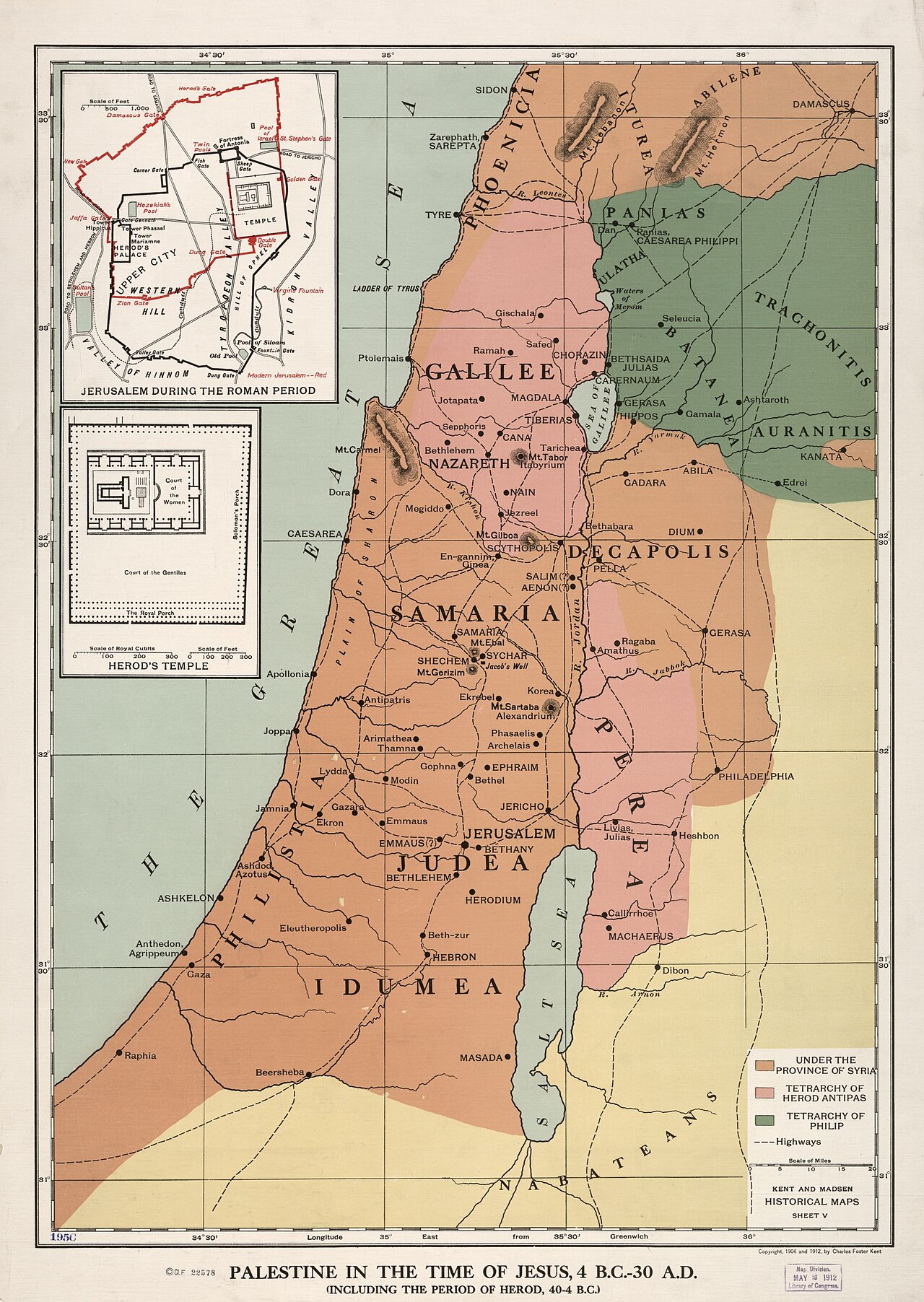
It can look like a contradiction: here John flatly denies being Elijah, yet Jesus later says of him, "he is Elijah who is to come" (Matthew 11:14). Both are true, from different angles. John was not the literal Elijah returned from heaven, which is what his questioners meant. But he came, as the angel promised, "in the spirit and power of Elijah" (Luke 1:17), doing Elijah's work of turning hearts back before the day of the Lord (Malachi 4:5–6). John declines the legend and quietly fulfills the calling. That is a very Johannine kind of humility.
2“Behold, the Lamb of God”
The next day the unknown man in the crowd steps forward, and John finally has someone to point at. What he says is one of the most compressed sentences in the Bible, and it would have detonated in a Jewish imagination. The Lamb of God. Every lamb they had ever known flooded into that phrase at once.
There was the Passover lamb, its blood on the doorposts so that death would pass over the house (Exodus 12). There was the lamb of the daily sacrifice, morning and evening in the temple, keeping the nation's fellowship with God intact. There was the ram caught in the thicket that God provided in place of Isaac, after Abraham had told his son, "God will provide for himself the lamb" (Genesis 22:8). And there was the strangest picture of all, the servant of Isaiah 53 who was "led like a lamb to the slaughter," bearing the sins of many without opening his mouth. John gathers every one of those lambs and lays them on Jesus. This is the Lamb all the others were pointing to — and unlike them, this one takes away sin not for a household or a nation but "of the world."
"The Lamb of God" is a doorway into the whole sacrificial story of Scripture. Follow the lamb from the exodus to the throne of heaven:
Then John describes how he knew. He had been told to watch for a sign: the man on whom the Spirit came down and stayed.
Notice what John's Gospel leaves out here. The other three Gospels describe Jesus' baptism directly, with the heavens opening and the voice from above. John never describes the baptism itself. He gives it to us secondhand, as testimony: "I saw… I have borne witness." Even the descent of the Spirit reaches us through a witness. That is how this whole Gospel works. We are not watching from a neutral distance. We are jurors, hearing sworn evidence and being asked what we will do with it.
3“Come and you will see”
The Baptist does the finest thing a mentor can do: he points his own disciples away from himself and toward Jesus, and he is glad to watch them go. Two of them peel off and start trailing the Lamb down the road. And then Jesus turns around, and the first words out of his mouth in this entire Gospel are a question aimed straight at them — and, past them, at us. "What are you seeking?"
That is a striking first question. Of all the ways the eternal Word could have opened his mouth in John, he opens by asking about desire. He does not ask, "What do you believe?" He asks what they want, because that is usually the truer test. The two don't have a polished answer. They blurt out, almost shyly, "Rabbi, where are you staying?" It is really a way of asking whether they can come with him. And Jesus gives the invitation that will echo through the rest of the chapter.
Come and you will see.
John 1:39It is not a syllabus or a statement to sign. It is an invitation to come close and find out. They spent the day with him. John even remembers the time, "about the tenth hour," the kind of detail you keep when you were there. One of the two is named: Andrew. The other is left unnamed. By long tradition that disciple is John himself, the author, slipping into his own story without giving his name, as he does again at the cross and the empty tomb.
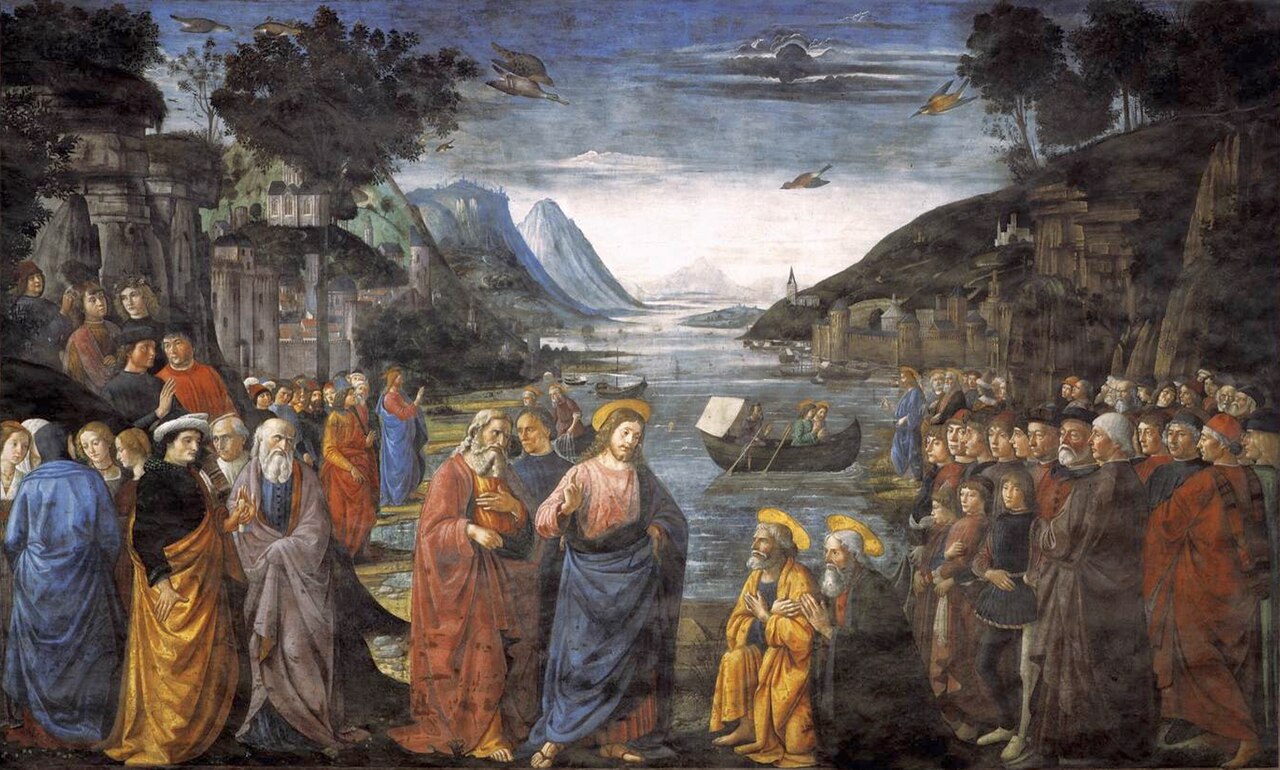
And here the pattern that will define the chapter clicks into place. The first thing Andrew does — the very first — is go and get his brother.
Andrew is one of Scripture's quiet heroes. He is almost always in the background, and almost every time we see him he is bringing someone to Jesus: his brother here, the boy with the loaves in chapter 6, the Greeks who come asking in chapter 12. His ministry is mostly introductions. And look what Jesus does with the brother he brings. He takes one look at unstable, impulsive Simon and renames him Rock. Not because Simon is a rock; anyone who reads the Gospels knows he is the opposite, right up to the night he denies he ever knew the man. Jesus names him for what grace will make of him. He sees who you are, and he sees who you will become in his hands.
"Come and see" is not a throwaway line; it is John's model of how faith spreads — not by winning arguments but by handing people over to Jesus and letting him do the rest. Watch it repeat:
4“Can anything good come out of Nazareth?”
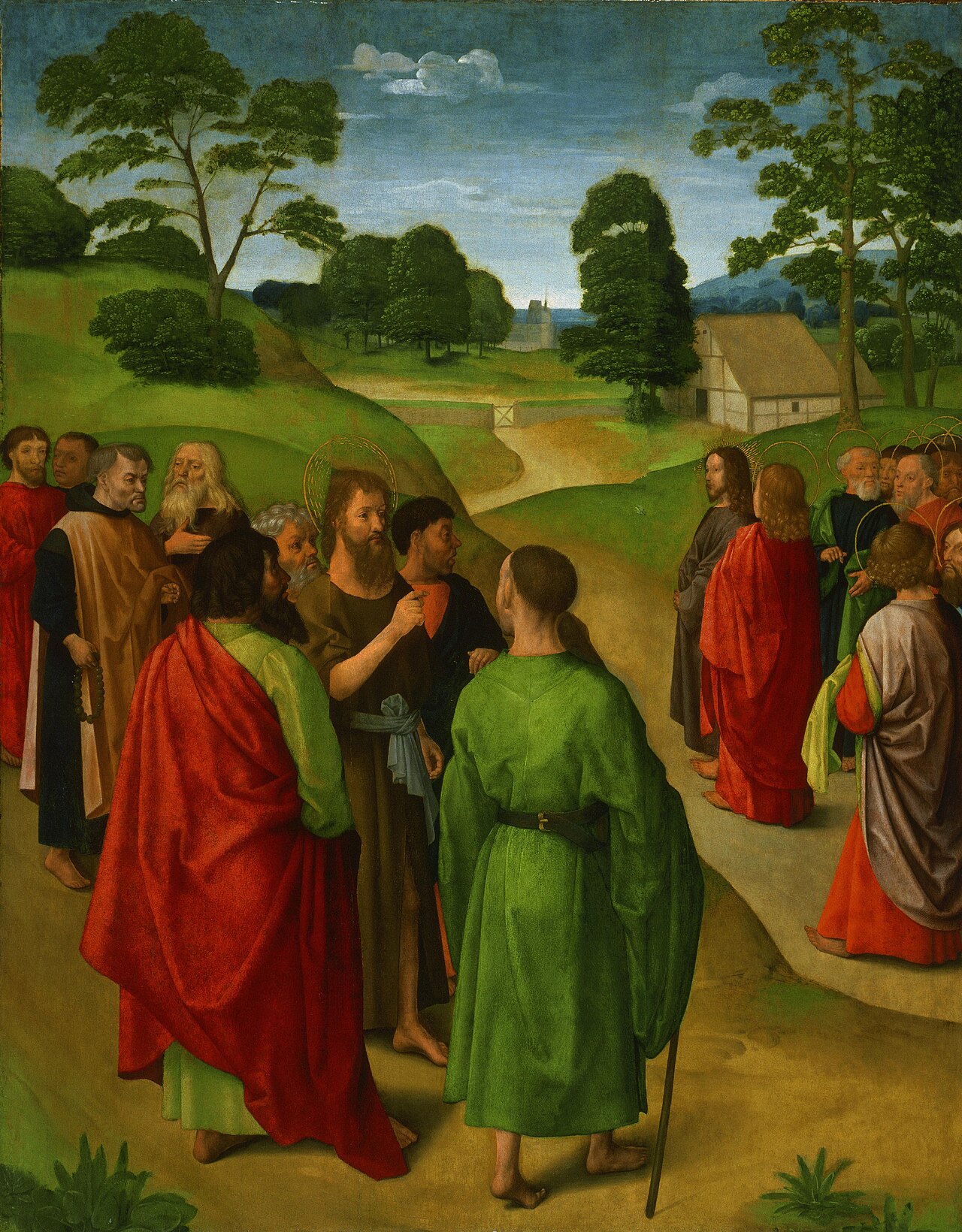
The chain keeps going. Jesus finds Philip, and Philip goes straight to Nathanael. Nathanael says out loud the honest doubt a lot of people feel and are too polite to voice: "Nazareth? That backwater?" It is a fair question. Nazareth was a nothing town, never mentioned in the Old Testament, the kind of place that produces no one important. Philip does not argue with him. He simply reuses the line that started all of this: "Come and see." Often the best answer to a skeptic isn't a better argument. It's a closer look at Jesus.
Jesus greets him with a compliment that has a wink in it: "an Israelite in whom there is no deceit." The nation of Israel got its name from Jacob, and Jacob was a man built on deceit. He cheated his brother and tricked his father. Here, Jesus says, is a son of Israel with none of that old cunning in him, a straight and honest man. Then Jesus unnerves him by describing where he had been before they ever met, "under the fig tree." We are not told what happened there. Whatever that private moment was, prayer or longing or study of the Scriptures, Jesus had seen it. That is enough to break the skeptic wide open.
In the space of one conversation, Nathanael goes from "can anything good come out of Nazareth?" to "you are the Son of God, the King of Israel." But Jesus will not let him settle there. He tells him he has barely started to see. Then comes the line the whole chapter has been building toward, and it reaches back to Jacob again. This time not to his deceit, but to his dream.
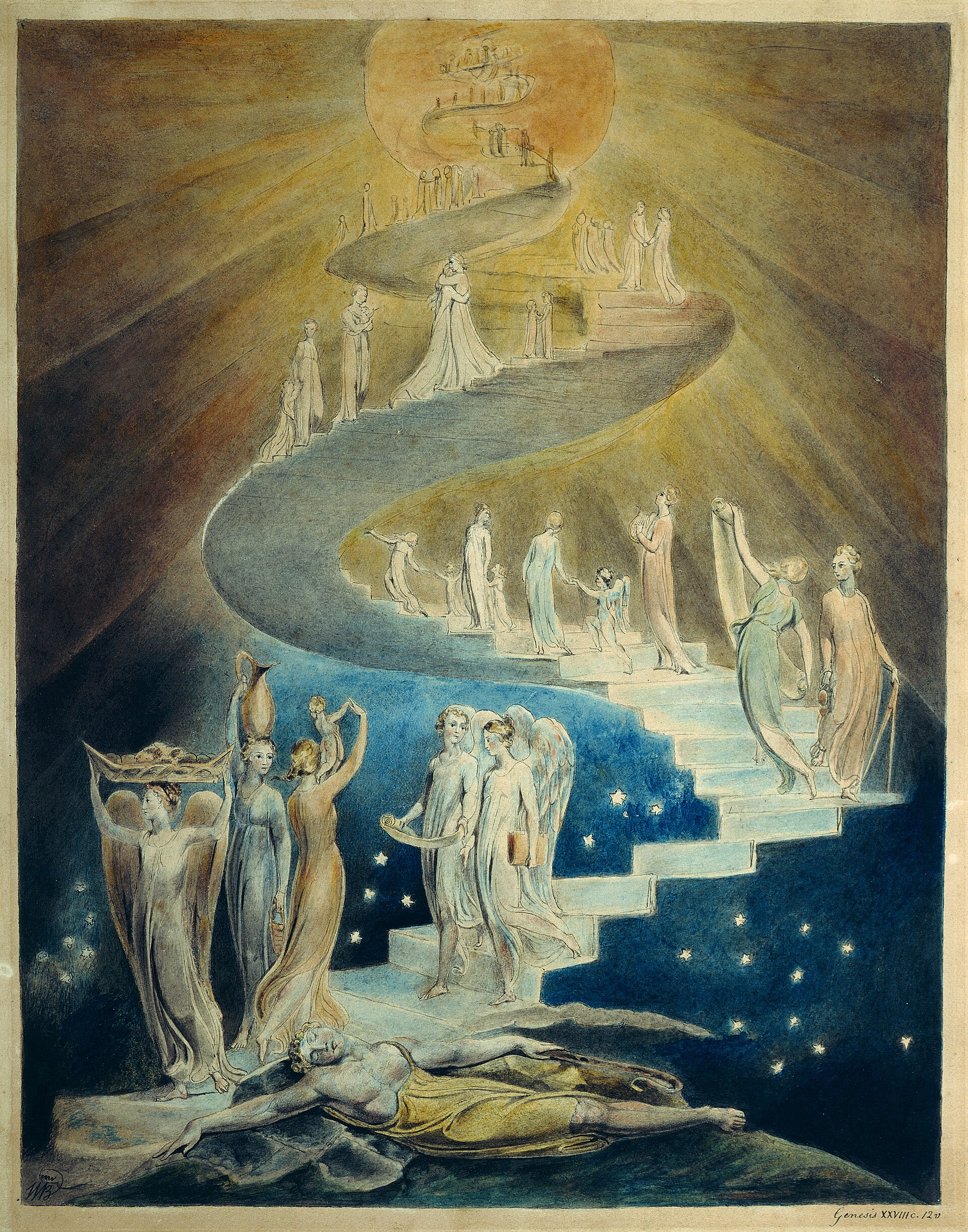
Fleeing his brother, alone in the dark at a place he would name Bethel, "house of God," Jacob had dreamed of a ladder set up between earth and heaven, with the angels of God going up and down on it and the Lord standing above (Genesis 28). He woke and said, "Surely the Lord is in this place… this is the gate of heaven." Jesus takes that ancient dream and puts himself where the ladder was. He is the stairway now — the one point where heaven stands open and earth is joined to God, the true house of God and gate of heaven. If you want traffic between this world and the next, Jesus says, it runs through me.
"Truly, truly, I say to you" (1:51) is the first of twenty-five times Jesus opens with this doubled word in John — in Greek, amēn amēn. Nobody else in the ancient world spoke this way. Normally "amen" was said after a statement, to affirm someone else's words. Jesus puts it in front of his own, staking his own authority on what he is about to say. It is a small verbal habit that quietly claims a very large thing.
And notice the title he chooses for himself: not King of Israel, which Nathanael had just offered, but "the Son of Man." It is the name Jesus uses for himself more than any other, drawn from Daniel 7, where "one like a son of man" comes on the clouds to receive an everlasting kingdom from God. It sounds humble — a son of man, a human being — and it is loaded with glory. That double edge is exactly the point.
| Title | Who says it | Where |
|---|---|---|
| The Word / God | John the Evangelist | 1:1 |
| The Lamb of God | John the Baptist | 1:29, 36 |
| The Son of God | John the Baptist; Nathanael | 1:34, 49 |
| Rabbi / Teacher | The first disciples | 1:38, 49 |
| The Messiah / Christ | Andrew | 1:41 |
| Him of whom Moses wrote | Philip | 1:45 |
| The King of Israel | Nathanael | 1:49 |
| The Son of Man | Jesus, of himself | 1:51 |
Pile them up and the effect is staggering. In a single chapter, from a string of ordinary people, Jesus is named Word, God, Lamb, Son of God, Rabbi, Messiah, the one all Scripture was about, King, and Son of Man. John is doing on the ground what the Prologue did from the heights: stacking up the confession of who this is, so that we cannot pretend, a few chapters on, that we were never told.
Where this leaves us
“Greater things than these”
The chapter ends leaning forward. "You will see greater things," Jesus tells Nathanael, and the promise is really made to us. Everything from here on, the water turned to wine, the blind man given sight, the dead man called out of his tomb, is that open heaven Jacob glimpsed and Nathanael was promised, opening a little wider over the head of the Son of Man. We have been shown the door. The rest of the Gospel is watching it swing wide.
And there is a pattern here to take with us, because it has not changed in two thousand years. A witness points: "Behold." A seeker is invited: "Come and see." Someone finds him, and the first thing they do is go find someone else. Andrew fetches Peter. Philip fetches Nathanael. Nobody in this chapter keeps Jesus to themselves, and nobody wins anyone with cleverness. They tell what they have found and hand people over to him. The light spreads the way it did on that first riverbank, one introduction at a time.
Questions
- John the Baptist kept refusing titles that were his for the taking, content to be "a voice." Where are you tempted to hold on to a bit of credit that would be better spent pointing at Christ? Reflect
- "The Lamb of God" gathers up Passover, the daily sacrifice, Isaac's ram, and Isaiah 53 all at once. Which of those pictures most deepens the cross for you, and why? Discuss
- Jesus' first words in the Gospel are "What are you seeking?" If he asked you that today, honestly, what would the true answer be? Reflect
- Jesus renamed impulsive Simon "Rock" long before he acted like one. How does it change things to know he names you for what grace will make of you, not only for what you are now? Discuss
- The whole chapter runs on "come and see" and on people fetching the next person. Who first brought you to Jesus, and who is the person you could simply invite to look? Discuss