Chapter one was all confession, title after title laid on Jesus by other people. Chapter two is the first time we watch him act, and John gives us two actions that seem to belong to two different men. At Cana he quietly rescues a family from disgrace and floods a party with the best wine anyone there has tasted. In Jerusalem he makes a whip and drives the livestock and traders out of the temple in anger. A gentle host in one scene, a furious one in the next. But John told us we would see his glory (1:14), and here it is: a glory that is generous and a glory that is jealous, with no contradiction between them.
1The first sign: water into wine
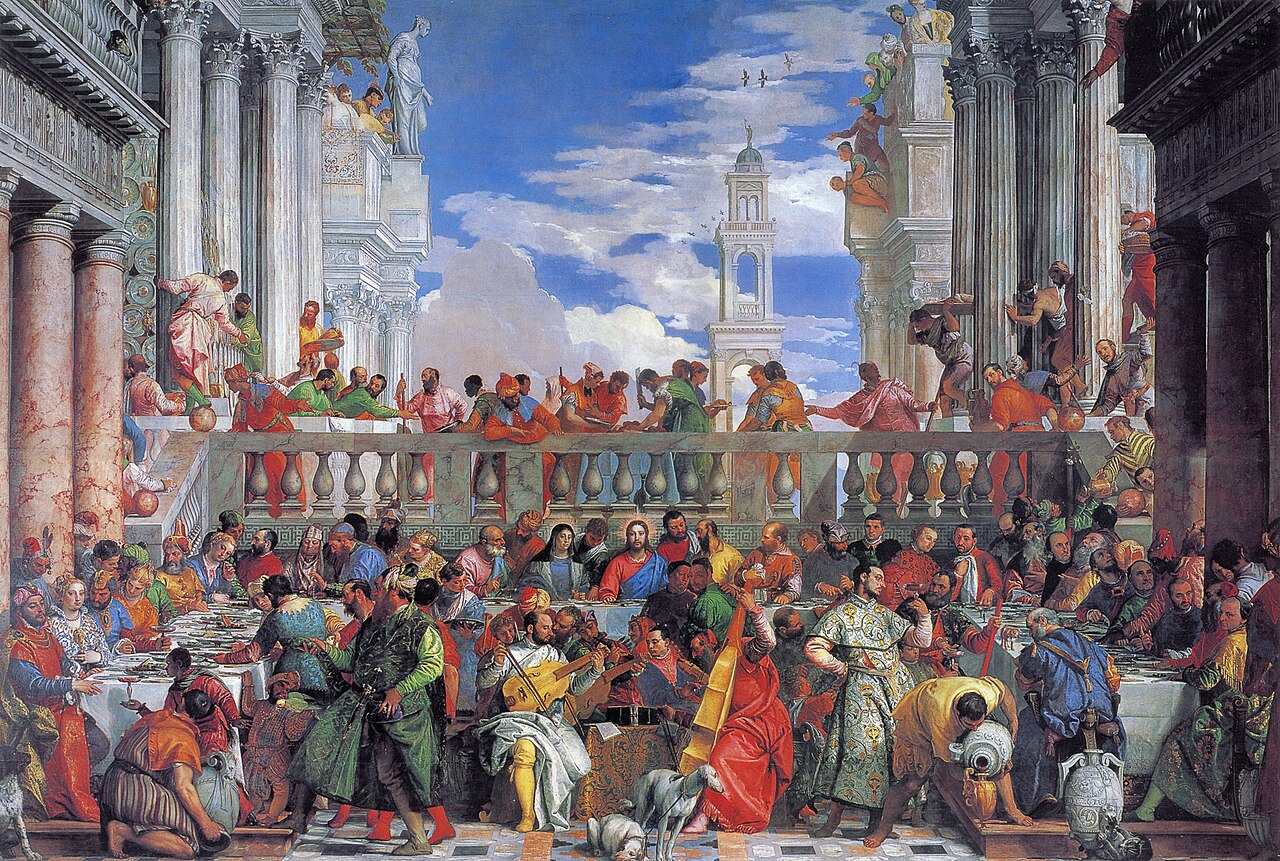
Start with the crisis, because to us it barely registers as one. The wine ran out. In a modern wedding that is an embarrassment; in that culture it was a small catastrophe. A village wedding was a days-long feast, and to run dry was to shame the groom's family publicly for years to come. Mary sees it, and she brings it to her son with the fewest possible words: "They have no wine." She does not tell him what to do. She simply puts the need in front of him, which is often the truest form of prayer there is.
Jesus' reply sounds cold in English: "Woman, what does this have to do with me?" But "Woman" was not harsh in that world. It was closer to "ma'am," and he uses the same word tenderly from the cross when he gives her into John's care (19:26). What he is doing is gently taking her hand off the wheel. His timing will be set by his Father, not by his family, and here he names for the first time the thing that governs everything he does: my hour. All through this Gospel that word points down one road, toward the cross and the glory beyond it. Already, quietly, the wine at Cana and the blood at Calvary belong to the same story.
"My hour has not yet come" is the first drop of a current that runs the length of the book. For eleven chapters the hour is always not yet (2:4; 7:30; 8:20). Then, as the cross draws near, the language flips: "The hour has come for the Son of Man to be glorified" (12:23; 13:1; 17:1). For John, Jesus' "hour" is not mainly his death or mainly his glory but both at once — the cross is the glory. Keep an ear out for it.
Every detail here is chosen. The jars are for "the Jewish rites of purification" — the endless ceremonial washing of the old order. Jesus fills that old apparatus to the brim and turns its contents into wine. And the arithmetic is staggering: six jars at twenty or thirty gallons each is something like a hundred and fifty gallons of wine, far more than any wedding could drink, and every drop of it better than the best the steward had tasted. This is not a man topping off a punch bowl. It is a picture, drawn in extravagance, of what happens wherever Jesus comes: the water of mere religion becomes the wine of joy, and it comes in a flood.
σημεῖονsēmeion · "sign"
John never calls Jesus' miracles "wonders" or "mighty works," as the other Gospels sometimes do. He calls them signs. A sign is not there to be admired; it is there to point — a finger indicating something past itself. The water-into-wine is "the first of his signs," and John tells us exactly what it points to: Jesus "manifested his glory" (2:11). The miracle matters not because a party was saved but because, for a moment, the veil thinned and his disciples saw who he was. Every sign in this book works that way. Ask of each one not just "what did he do?" but "what is it pointing at?"
There is a reason the very first sign is wine at a wedding. All through the prophets, the age of God's salvation was pictured as a feast running with wine: "on this mountain the Lord of hosts will make for all peoples a feast… of well-aged wine" (Isaiah 25:6), a day when "the mountains shall drip sweet wine" (Amos 9:13). By turning water to wine at a wedding feast, Jesus is quietly sounding every one of those promises at once. The party the prophets promised has started. The bridegroom has come.
The wine of Cana is soaked in Old Testament hope. Read the promises the sign is quietly fulfilling — and where the true wedding feast finally lands:
2“Destroy this temple”
From a wedding in the hills to the temple in Jerusalem at Passover, and the mood changes like a slammed door. The trade Jesus attacks was not, on its face, a scam. Pilgrims needed unblemished animals to sacrifice and needed to change foreign coin into temple currency, and someone had set all of that up in the one part of the temple where non-Jews were allowed to pray, the Court of the Gentiles. The house of prayer for all nations had been turned into a livestock market and a currency exchange, and the people it crowded out were the very outsiders it was supposed to welcome. Jesus' anger is not a loss of composure. It is the entirely appropriate fury of the Son at seeing his Father's house treated like a bazaar.
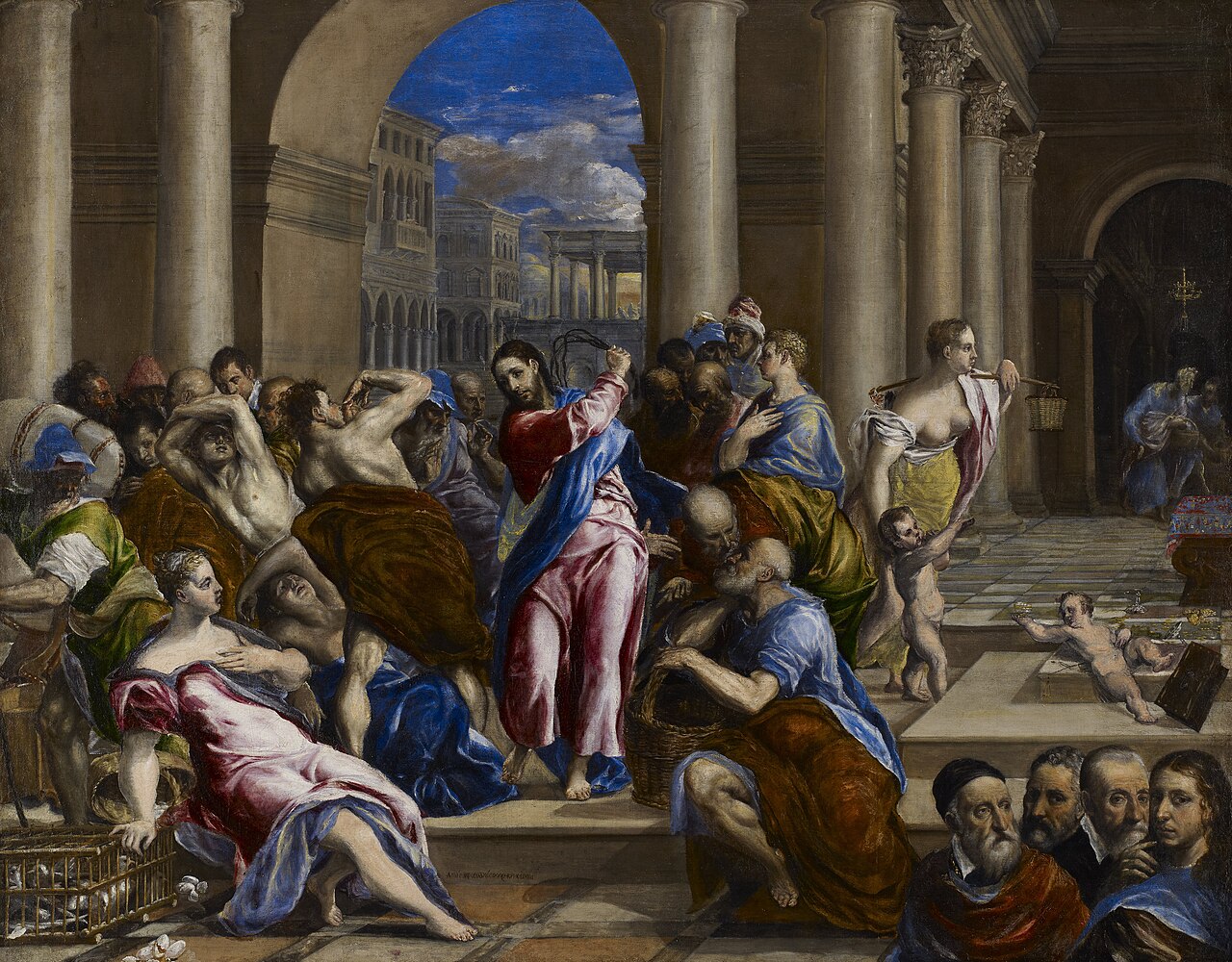
His disciples, watching, remember a line from Psalm 69: "Zeal for your house will consume me" (2:17). It is a telling memory, because the same psalm is a song of a righteous sufferer, and the word "consume" will prove grimly literal. This zeal will, in the end, help get him killed. Then the authorities demand his credentials — by what sign do you claim the right to do this? — and his answer is a riddle they cannot possibly decode.
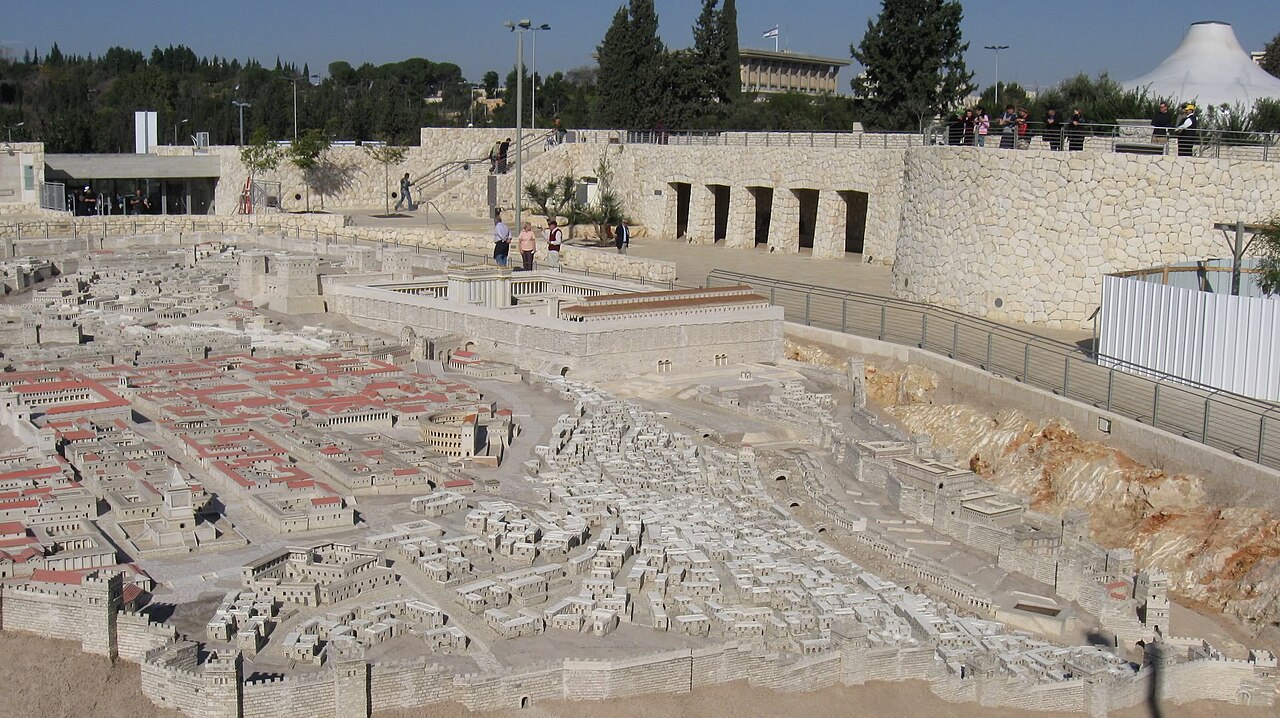
They think he means the building — and no wonder, since Herod's temple had been under construction for forty-six years and was still not finished. But John lets us in on the secret they miss: "he was speaking about the temple of his body." This is one of the great hinges of the Gospel. What is a temple? It is the place where God dwells with his people, where heaven and earth meet, where sins are dealt with and God is encountered. John has been telling us since the Prologue that all of this has now moved into a person: the Word "tabernacled among us" (1:14); Jesus is Jacob's ladder joining earth to heaven (1:51). Here he says it almost outright. He is the true temple. Tear this one down, he says, and in three days it will stand again — and only after the resurrection do the disciples realize he had told them the whole thing in advance.
"His body" as the true temple is a thread that runs from the prophets to the last page of the Bible. Trace where God's dwelling-place goes:
Matthew, Mark, and Luke all place a temple cleansing in the last week of Jesus' life; John places one at the very start of his ministry. Some read this as two separate cleansings, one early and one late, which is entirely possible. Others note that John arranges his Gospel thematically rather than as a strict diary, and that he has deliberately set this scene up front because it announces, on page two, the collision course between Jesus and the temple system that the whole book is about. Either way, John's point is not chronological but theological: from the beginning, a greater temple has arrived, and the old one's days are numbered.
3He knew what was in man
The chapter ends on a quiet, sobering note that is easy to skim past. Crowds "believed" when they saw the signs, and yet Jesus "did not entrust himself to them." There is a play on words in the Greek: they trusted him, but he did not trust them. He could see straight through a faith that only wanted the fireworks. You can be impressed by Jesus, even call it belief, without ever handing him your life, and he is never fooled by it. He "knew what was in man." Then John does something deft. He immediately introduces one particular man, a respected teacher who came at night because he had seen the signs (3:1–2). We are about to watch Jesus look into one such heart and tell it that admiring signs is not nearly enough. You must be born again.
Where this leaves us
Glory, generous and jealous
Hold the two scenes together, because John meant us to. At Cana, glory looks like a hundred and fifty gallons of the best wine poured into a family's shame. It is sheer, wasteful generosity. In the temple, glory looks like a whip and overturned tables, a holiness that will not sit quietly while God's house is cheapened. We tend to want one without the other, a Jesus who is only kind or a Jesus who is only fierce. The real one is both, and the two fit together. He is jealous for what is holy because he is so generous with grace. The same glory that fills the empty wine jars overturns the crooked tables. And both point to the same place: the true temple, his own body, torn down and raised in three days, where the feast is finally thrown and the house of prayer is opened to all.
Questions
- Mary simply names the need — "they have no wine" — and leaves it with Jesus. What would it look like to bring a worry to him that plainly, without also telling him how to fix it? Reflect
- The first sign turns the water of ritual into the wine of joy, in flood quantities. Where have you settled for the "water" of religious routine when Jesus is offering the wine? Discuss
- Jesus is both the host pouring out wine and the Son wielding a whip. Which side of his glory are you more comfortable with, and what does the side you resist have to teach you? Discuss
- He calls his own body the true temple — the place God is now met. How does that reframe where you go looking for God? Discuss
- "He knew what was in man," and would not entrust himself to a sign-hungry faith. Be honest: is your faith drawn to what Jesus can do for you, or to Jesus himself? Reflect